




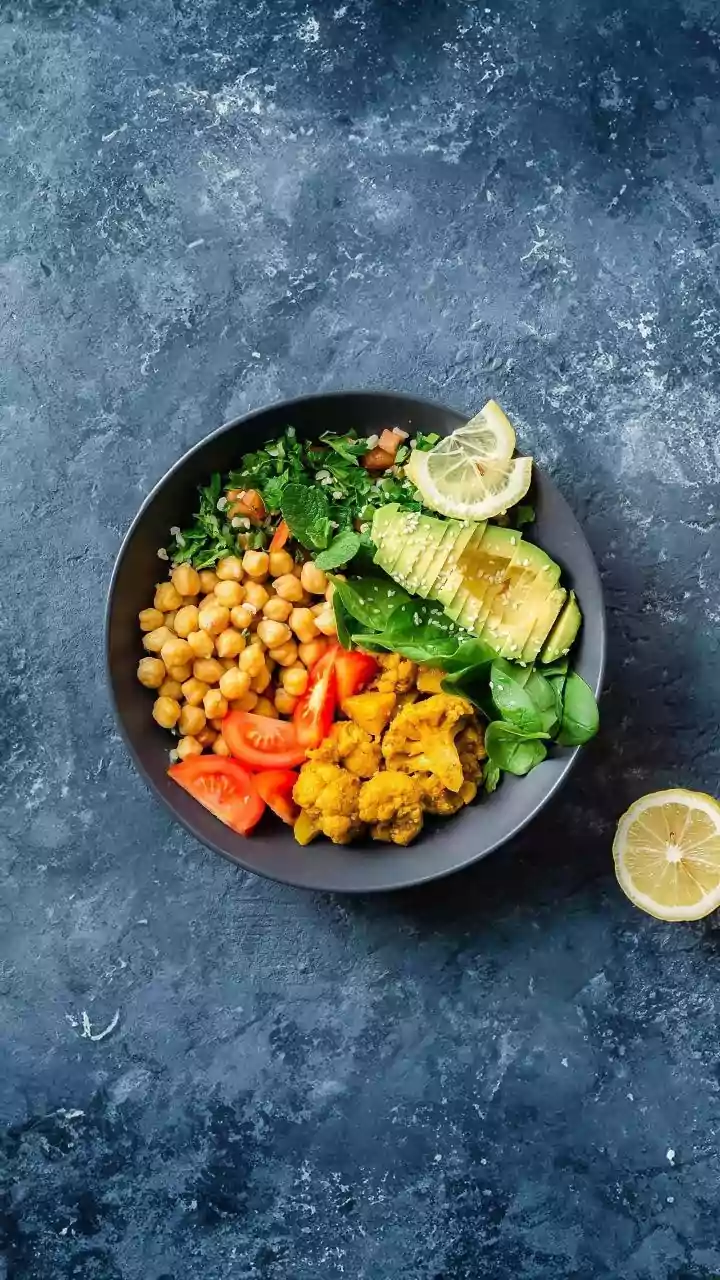
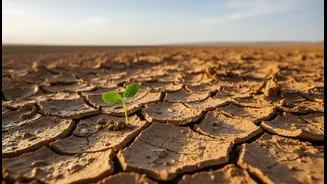


Why Your Plate Matters for the Planet
First, let's connect the dots between our food and the environment. The entire journey of our food, from farm to table, contributes to greenhouse gas (GHG) emissions. In India, the agricultural sector is a significant source of these emissions. Methane,
a potent GHG, is released during rice cultivation and by livestock like cattle and sheep. Nitrous oxide, another powerful warming gas, comes from the use of fertilisers in soil. Studies show that our global food system accounts for a large portion of all human-created GHG emissions. While India's traditional dietary guidelines have a relatively low carbon footprint compared to Western countries, what we choose to eat still has a measurable effect. The biggest contributors to diet-related emissions in India are dairy products (mostly milk), mutton, and rice.
Beyond the One-Size-Fits-All Rulebook
Here's where the conversation gets more interesting. Much of the advice around sustainable eating is generic: “eat less meat,” “go vegan,” “avoid dairy.” While well-intentioned, this advice ignores a critical factor: your starting point. This is the concept of “varied household baselines.” Put simply, the most effective dietary changes you can make depend entirely on what your household currently eats. A one-size-fits-all strategy is inefficient. For a family that consumes mutton several times a week, the single biggest climate win is not to suddenly go vegan, but perhaps to reduce their mutton intake. For a vegetarian household, the focus would be entirely different. This personalised approach moves away from a rigid, often unattainable ideal and towards practical, high-impact adjustments.
Finding Your Household’s High-Impact Swaps
Let's make this practical. Your household's 'baseline' is its typical weekly eating pattern. The key is to identify the most resource-intensive items in that pattern and find smarter swaps. For a Non-Vegetarian Household: The data is clear—mutton has a significantly higher GHG footprint than other proteins. One study found that a meal with mutton emits 1.8 times more greenhouse gases than a vegetarian meal and 1.5 times more than a chicken meal. If your family eats mutton regularly, the most powerful change is to replace some of those meals with chicken or fish. An even better swap is for plant-based proteins like dal, chickpeas, or beans, which are staples in the Indian diet. For a Vegetarian Household: If your family is already vegetarian, the focus shifts. In India, dairy is the single largest contributor to diet-related GHG emissions. This doesn't mean you must eliminate paneer, ghee, and milk. Instead, consider moderation. Could one or two paneer dishes per week be swapped for a vegetable- or lentil-based curry? Another significant factor is rice, which has a much higher GHG footprint than wheat because of the methane released from flooded paddies. Swapping rice for rotis or other millets for a few meals a week can be a meaningful change.
A Strategy of Progress, Not Perfection
Adopting a climate-friendlier diet isn't about deprivation or completely overhauling your cultural food traditions. In fact, traditional Indian diets, rich in a variety of pulses, grains, and vegetables, are inherently sustainable. The goal is to be more conscious of the components that have a disproportionately high environmental cost and make mindful adjustments. Start by looking at your own grocery bills and meal plans. What do you eat the most of? Where are the easy swaps? Reducing your portion of a high-impact food and adding a side of dal or vegetables is a great start. Bulking up a meat curry with vegetables or lentils also reduces the overall environmental load of the meal. The idea is to shift the proportions on your plate gradually. This approach is more sustainable for your lifestyle and, collectively, for the planet. Every small, informed shift, when multiplied across households, adds up to a significant positive impact.