





The Foundation: A Perfect Dough
The secret to perfectly shaped Kaju Katli begins long before you pick up a knife. It starts with the dough. Your goal is a smooth, pliable, and non-sticky ball of cashew mixture. After cooking your cashew powder and sugar syrup, the mixture should start to leave
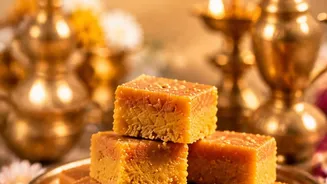
the sides of the pan and come together as a soft mass. A common test is to take a tiny piece, let it cool slightly, and roll it between your fingers. It should form a smooth, non-sticky ball. If the mixture is too sticky, it may be undercooked and need a few more minutes on low heat. If it's too dry and crumbly, it might be overcooked. In this case, you can try to knead it with a splash of milk or water to bring back some moisture, though this may shorten its shelf life. Getting this consistency right is the most critical step, as it ensures the dough will be cooperative when you roll and slice it.
Kneading and Rolling with Care
Once your cashew dough is cooked, transfer it from the pan to a sheet of parchment paper or a greased surface. Allow it to cool for a few minutes until it is warm but not painfully hot to the touch. Kneading while the dough is still warm is essential for a smooth texture, but rushing can lead to burnt fingers. Gently knead the dough for a minute or two until it’s smooth and velvety. Be careful not to over-knead, as this can cause the cashews to release their oils, making the katli hard. For rolling, using parchment paper is highly recommended. Place the dough ball on one sheet and cover it with another. This prevents sticking without needing excess ghee, which can make the katli greasy. Using a rolling pin, apply even pressure to roll the dough out to a uniform thickness of about ¼ inch (around 3 to 5 mm). An even thickness is key for a consistent bite and a professional look.
The Importance of Cooling
Patience is a virtue, especially when making Kaju Katli. After rolling out the dough to your desired thickness, you must let it cool and set properly before attempting to slice it. Rushing this step is a common mistake that leads to messy cuts and broken pieces. If you cut while the dough is still too warm and soft, the knife will drag, and the diamonds won’t have clean, sharp edges. Let the rolled-out cashew sheet rest at room temperature for at least 15-20 minutes. Some recipes even suggest letting it air dry for several hours, depending on humidity. The dough is ready for cutting when it feels firm to the touch but not completely hard. A simple test is to gently press a corner; it should hold its shape without feeling wet or sticky. This cooling period allows the fudge to firm up just enough to withstand the pressure of a knife.
Achieving the Perfect Diamond Cut
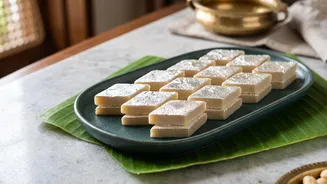
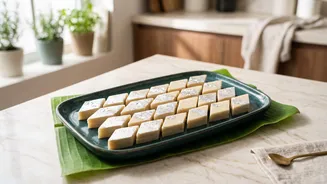
Now for the defining moment: cutting the iconic diamond shapes. For the cleanest cuts, use a very sharp knife or a pizza cutter. If you want perfectly uniform pieces, a ruler is your best friend. Start by making long, parallel cuts across the sheet of cashew dough, spacing them about an inch apart. Once you have completed all the cuts in one direction, turn the sheet (or your ruler) to create diagonal cuts going in the other direction. This cross-hatching of diagonal lines will create the classic diamond pattern. After cutting, don't immediately try to separate the pieces. Let them sit for a little while longer to fully set. Then, you can gently separate the individual katlis. If you plan to add the traditional silver leaf (varak), apply it gently over the entire rolled sheet before you begin cutting.