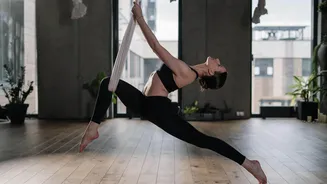








What Exactly Is Aerial Yoga?
Aerial yoga is a hybrid practice that blends traditional yoga postures with elements of Pilates, dance, and acrobatics. The key piece of equipment is a soft fabric hammock, or silk, suspended from the ceiling. This hammock acts as a support system, helping
you to hold poses, achieve deeper stretches, and even go fully upside down with a sense of security. It’s not about joining the circus; it's about using the fabric as a tool to explore movement in a new way, modifying or intensifying traditional yoga poses by working with (and against) gravity. A typical class involves warming up, learning to trust and use the hammock, and then moving through sequences of poses, before ending with a relaxing, cocoon-like rest inside the fabric.
The Refreshing Reality: What It’s Great For
The most celebrated benefits of aerial yoga are physical. The support of the hammock allows you to deepen your flexibility in ways that might not be possible on a mat, reducing strain on your joints while you stretch. It's also a fantastic core workout. Nearly every movement requires you to engage your abdominal muscles for stability, leading to improved core strength and better posture over time. One of its most unique advantages is spinal decompression. By hanging in inversions, you allow gravity to gently lengthen your spine, which can provide relief from the compression caused by sitting at a desk all day. It's a low-impact, full-body workout that builds strength in the upper body and legs as you pull, wrap, and support yourself.
A Cure for Workout Boredom
Beyond the physical gains, aerial yoga offers a significant mental refresh, primarily by combating exercise fatigue. The novelty and playful nature of being suspended in the air can make working out feel less like a chore and more like a creative expression. This sense of play helps reduce stress. There is also a confidence-building element to the practice. Mastering a new pose or simply learning to trust the hammock can be incredibly empowering, boosting self-esteem as you overcome initial fears. This focus on being present in your body and mindful of your movements can help quiet a busy mind, offering a meditative experience that leaves you feeling calmer and more centred.
The Cognitive Question: Where Claims Get Murky
Some proponents suggest aerial yoga offers direct cognitive gains, such as improved memory and sharper focus. While it's true that inversions increase blood flow to the brain, and the practice demands intense focus, the evidence for lasting cognitive enhancement specifically from aerial yoga is thin. Any activity that requires concentration, balance, and learning new motor patterns will challenge your brain and improve focus during the activity. This is a benefit of mindfulness and engagement, not necessarily a unique brain-boosting property of aerial yoga itself. The mood lift you feel is likely from the release of endorphins common to all exercise, combined with the joyful experience of the practice. So, while it will certainly make you feel more alert and focused post-class, it's best viewed as a tool for mindfulness rather than a guaranteed cognitive upgrade.
Is Aerial Yoga Right for You?
Aerial yoga is adaptable for many fitness levels, but it isn’t for everyone. The inversions and pressure from the fabric mean that individuals with certain conditions should avoid it. Key contraindications include glaucoma, uncontrolled high or low blood pressure, heart conditions, vertigo, recent surgeries, and pregnancy. People with severe back issues or joint disorders should also proceed with caution. If you're new, start with a beginner-level class where the instructor can guide you on proper form and safety. The goal is to challenge yourself, not to risk injury. Listening to your body is paramount; if something feels painful or you become dizzy, it's important to stop.