





The Billion-Dollar Problem of Disposable Rockets
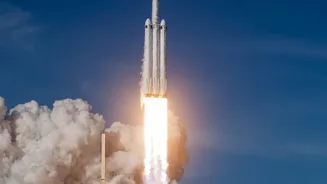
For most of spaceflight history, rockets were single-use machines. They would launch a payload and then fall back to Earth, burning up in the atmosphere or crashing into the ocean. This is an incredibly expensive way to do business. The cost of the rocket itself,
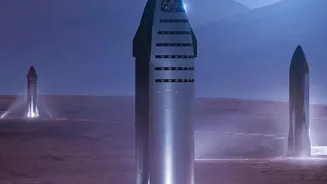
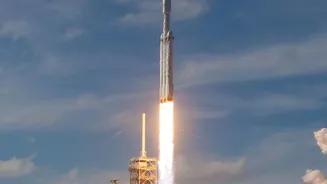
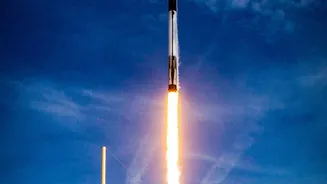
often hundreds of millions of dollars, is lost with every mission. SpaceX CEO Elon Musk has compared it to discarding a Boeing 747 after one trip from Mumbai to Delhi. The only way to dramatically lower the cost of accessing space and enable ambitious projects like building cities on Mars is to make rockets fully and rapidly reusable, much like an airplane. While SpaceX has been landing its Falcon 9 boosters for years, the Starship system is designed to take this concept to the extreme, with a goal of relaunching a vehicle within hours of its return.
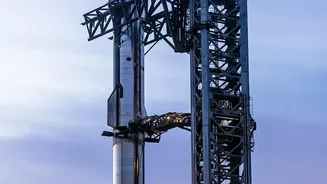
Meet 'Mechazilla': The Rocket-Catching Machine
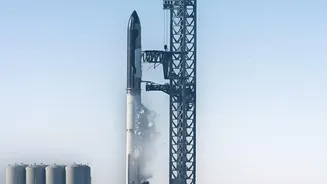
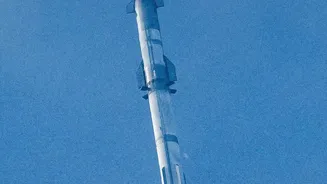
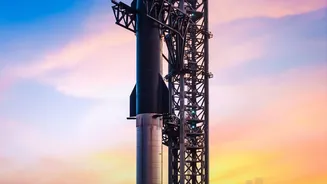
Instead of landing on legs, which add weight and complexity, Starship's Super Heavy booster and the Ship itself are designed to be caught by the launch tower. Nicknamed 'Mechazilla', this 146-meter (480-foot) tall structure is equipped with two giant mechanical arms, often called the 'chopsticks'. After separation, the booster or ship performs a series of burns to guide itself back to the launch site. As it descends, the vehicle uses its grid fins and engines to steer toward the waiting arms. The arms, guided by advanced control systems, close around designated hard points on the vehicle, securing it in mid-air and lifting it back onto the launch mount. This process eliminates the need for a separate recovery fleet and infrastructure, and in theory, allows the rocket to be quickly inspected, refueled, and prepared for its next flight.
Flight 15: A Tale of Two Catches
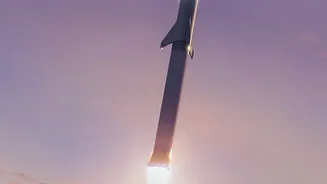
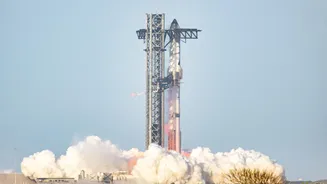
The 15th flight of the Starship system, which launched on November 13, 2026, was the most ambitious test of this system to date, with SpaceX aiming to catch both the Super Heavy booster and the Starship upper stage. The first half of the plan did not succeed. Shortly after a successful launch and stage separation, the Super Heavy booster's return was aborted due to a low-fuel alarm, causing it to divert to a splashdown in the Gulf of Mexico. However, the mission's second objective became a landmark achievement. After deploying 26 Starlink satellites and spending nearly a full day in orbit, the Starship upper stage (Ship 42) returned to Starbase on November 14. It plunged through the atmosphere, performed a 'belly-flop' maneuver to slow down, and then flipped vertical for a final engine burn, successfully navigating between the tower's arms to be caught for the first time in history.
Why the Catch Changes Everything
The successful catch of the Starship upper stage is a monumental engineering feat. Recovering the upper stage is significantly more difficult than the booster because it must endure the intense heat of re-entering the atmosphere from orbital velocity. This achievement validates a core part of SpaceX's design and is a critical step toward full reusability. By proving the catch is possible, the company moves closer to its goal of turning rocket launches into a routine, airline-like operation. The next step is to demonstrate that a caught vehicle can be quickly refurbished and flown again. While previous boosters have been reflown, it took several months of work. Achieving a turnaround time of days, or even hours, is necessary to support the planned high flight cadence for building out the Starlink constellation and enabling NASA's Artemis moon missions.