




The Lake of a Thousand Blues
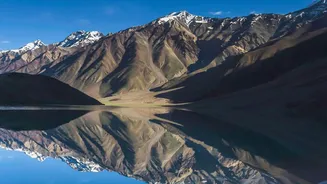
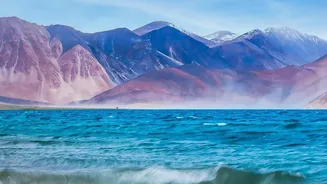
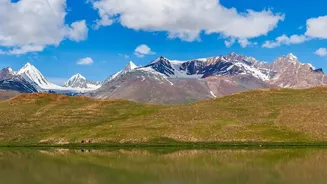
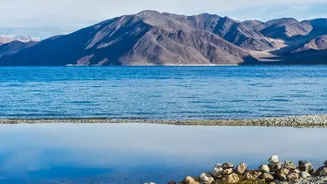
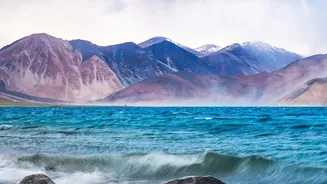
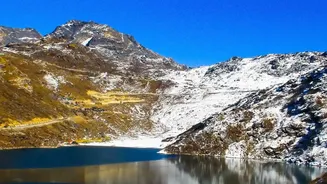
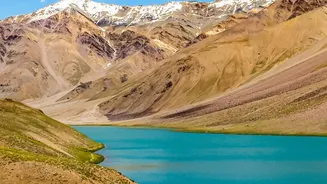
The first thing that strikes you about Tso Moriri is its sheer, unadulterated colour. It’s a vast canvas of deep blues that shift with the passing clouds and the angle of the sun. The water, fed by glacial streams, is so clear it mirrors the snow-dusted
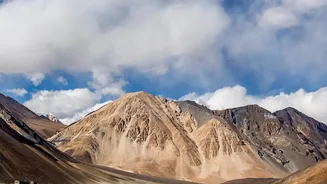
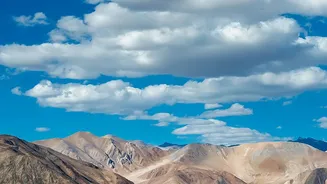
peaks that rise to over 6,000 metres around it, creating a perfect, unbroken panorama. This freshwater lake, also known as 'Mountain Lake', stretches for about 26 kilometres. Unlike the more famous Pangong Tso, Tso Moriri lies entirely within India, offering a more serene and less crowded experience. The changing hues, from sapphire in the morning to turquoise in the afternoon, against the backdrop of barren, ochre mountains, give the landscape its famously surreal and enchanting feel.
A High-Altitude Sanctuary
Sitting at an altitude of over 4,500 metres (around 14,836 feet), Tso Moriri is the largest high-altitude lake completely within Indian territory. Its ecological significance is immense. The lake and its surrounding marshes form the Tso Moriri Wetland Conservation Reserve, a designated Ramsar site of international importance. This protected status, the highest Ramsar site in the world, is crucial for preserving its fragile ecosystem. Due to these protections, activities like pitching tents or constructing buildings along the immediate shoreline are prohibited, ensuring the pristine beauty of the lake remains undisturbed for both visitors and its native inhabitants.
Home to Rare and Resilient Wildlife
The seemingly desolate landscape around Tso Moriri is teeming with life. The wetlands are a vital breeding ground for a variety of migratory birds, including the rare and endangered Black-necked crane and Bar-headed geese. Birdwatchers can spot up to 34 species of birds in the area. Beyond the avian population, the region is a sanctuary for unique Himalayan mammals. It's not uncommon to spot Kiang (Tibetan wild ass) grazing in the distance, or Himalayan marmots scurrying between rocks. The area is also part of the habitat for the elusive snow leopard, Tibetan wolf, and blue sheep, all of which have adapted to survive in this extreme high-altitude environment.
The Guardians of the Lake
The story of Tso Moriri is incomplete without the Changpa nomads. This semi-nomadic community has inhabited the Changthang plateau for centuries, moving with their herds in search of pastures. Their lives are deeply intertwined with the land and their livestock, which includes the famous Pashmina goats that produce fine cashmere wool. Near the lake lies Korzok, one of the highest permanent villages in the world and home to many Changpa families. Visiting Korzok offers a glimpse into a resilient way of life, governed by the seasons and a profound respect for nature. Their traditional yak-wool tents, known as 'rebo', can sometimes be seen dotted across the landscape, a testament to a culture that thrives in one of the world's harshest environments.
The Journey into Serenity
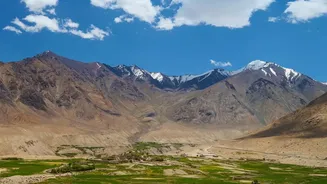
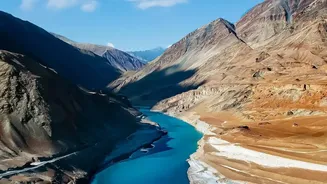
Reaching Tso Moriri is an adventure in itself. The journey from Leh, roughly 220-250 kilometres, takes six to eight hours through winding mountain roads, high passes, and expansive valleys. The drive itself is a visual treat, following the Indus River for a stretch before ascending onto the vast Changthang plateau. The remote location means facilities are basic, with accommodation primarily consisting of homestays and guesthouses in Korzok village. But this remoteness is precisely what preserves its magic. The profound silence, broken only by the wind and the call of birds, combined with the vast, star-studded sky at night, offers a chance to truly disconnect and immerse oneself in a landscape of raw, breathtaking beauty.