





What's New in the V5 Kit?
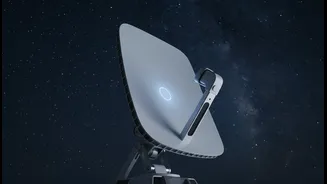
The latest residential hardware from Starlink, dubbed the V5, represents a major redesign. The new dish is dramatically smaller and lighter, weighing just 1.1 kg (2.4 pounds), a steep drop from the previous V4 model's 2.9 kg (6.5 pounds). This makes installation
far easier and more versatile for users, whether they are mounting it on a roof or a pole. The kit also includes a new, more compact 'Router Mini' that supports Wi-Fi 6, capable of connecting up to 235 devices. To simplify setup, the package comes with everything needed to get online, including a kickstand, a pipe adapter for roof mounting, and all necessary cables.
The Big Deal: A 50% Power Reduction
Perhaps the most significant upgrade is the V5's power efficiency. The new kit's average power consumption is between 35 and 50 watts, roughly half of the 75 to 100 watts required by the older V4 dish. This is a game-changer for many users in India, especially those in remote or rural areas who may rely on solar power, inverters, or backup generators. A lower power draw means the system can run for longer during outages or be sustained by a much smaller off-grid power setup. While the peak theoretical speed has been slightly adjusted to 375+ Mbps from the V4's 400+ Mbps, SpaceX is clearly prioritising efficiency and accessibility, a trade-off most residential customers will likely welcome.
Seamless Compatibility, Simplified Experience
A crucial point in the headline is the compatibility with existing routers. While the new V5 kit ships with its own Router Mini, the architecture of the Starlink system has generally maintained a level of backward compatibility. The previous generation 'Router 3' (part of the 'Standard 4X' kit) is a Wi-Fi 6 device that can be used with older dishes, sometimes with an ethernet adapter. This principle of compatibility saves existing users the cost and hassle of overhauling their entire home network. By focusing the V5's innovations on the dish and power consumption, SpaceX ensures that the core user experience remains straightforward while delivering meaningful hardware improvements. This approach is especially relevant for a market like India, where Starlink aims to begin operations in 2026, targeting regions that have struggled with reliable connectivity.
Who Is This For and Should You Upgrade?
The new V5 kit is primarily aimed at new residential customers. Given its lower power needs and lighter weight, it's an ideal solution for households in areas with inconsistent power or for those looking for an easier installation process. For existing Starlink users with a V4 or older dish, an immediate upgrade may not be necessary unless the power savings are a critical factor. The performance of previous kits remains robust for everyday streaming, gaming, and video calls. The launch is currently limited to select markets in the United States, with a broader global rollout, including to new markets like India, expected as production increases. With competitors like Reliance Jio and Bharti Airtel also exploring satellite internet, Starlink's focus on user-friendly and efficient hardware could be a key differentiator.