







The Sound of Progress, Interrupted
For years, the soundtrack of automotive progress has been the sound of silence. Electric vehicles (EVs) promised a future free from engine roar and exhaust notes, replacing them with a quiet, smooth hum. But a curious thing is happening on the way to this
silent future: some carmakers are bringing the noise back. Leading this charge is Hyundai, whose high-performance 'N' division is engineering its electric cars to feel and sound remarkably like their petrol-powered predecessors. This isn't just about playing engine sounds through speakers; it's a sophisticated attempt to recreate the entire sensory experience of driving a performance car, from the jolt of a gear change to the rumble felt through the seat. The flagship for this technology is the Ioniq 5 N, an all-electric hatchback that thinks it's a rally car.
Deconstructing the Digital Engine
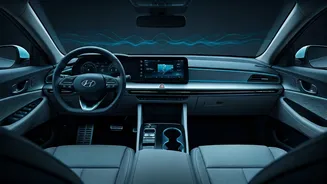
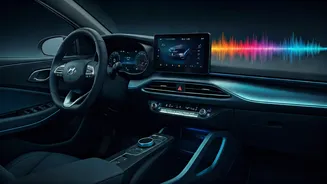
Hyundai’s system is built on two core technologies: N e-Shift and N Active Sound+. Think of N e-Shift as a virtual gearbox. Though the Ioniq 5 N, like most EVs, has a single-speed transmission, this software cleverly mimics an eight-speed dual-clutch transmission. As you accelerate, the system creates the sensation of gear changes by momentarily interrupting motor torque, giving you a distinct physical jolt just like a traditional car. You can even use paddle shifters to 'change gears', and if you don't 'upshift' in time, you'll hit a simulated rev limiter. Paired with this is N Active Sound+, a system of 10 speakers (eight inside, two outside) that generates a corresponding soundtrack. It offers several modes, including 'Ignition', which replicates the sound of a turbocharged Hyundai N petrol engine, and even futuristic options inspired by jet fighters.
More Than Just Fake Noise
While some critics have dismissed the idea as a gimmick, Hyundai argues it’s about driver engagement. The sounds and sensations of a petrol engine provide a huge amount of feedback to the driver, connecting them to the machine and the road. This 'flaw' of the internal combustion engine — its noise, vibration, and mechanical nature — is precisely what many driving enthusiasts love. By simulating these characteristics, Hyundai aims to make EVs more exciting and intuitive to drive, especially on a track. The simulated gears can help a driver better judge their speed and position when cornering, a task that can be difficult in a silent car with linear acceleration. According to Hyundai's R&D chief Manfred Harrer, the goal is not to be the most serious, but to be 'fun to drive'.
The Future Is Getting Louder
The positive reaction to the features in the Ioniq 5 N has encouraged Hyundai to push the idea even further. The company has revealed it is working on the next generation of this technology, which will include simulated idle vibrations, and even the pops and crackles of an exhaust backfire. These features are expected to be built into Hyundai’s next-generation 'IMA' EV platform, suggesting this is a long-term strategy, not a one-off experiment. Hyundai isn’t alone in this thinking. Other brands, including Porsche and Honda, are also exploring similar virtual gearshift systems, suggesting the industry sees a market for EVs that don't entirely abandon the visceral feel of the cars they are replacing.