




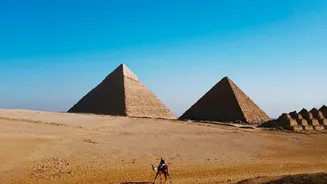
Luxor: The World's Greatest Open-Air Museum
Once the powerful ancient capital of Thebes, modern-day Luxor is an essential stop. Located on the East Bank of the Nile, the Karnak Temple Complex is a staggering maze of sanctuaries, pylons, and obelisks built over 2,000 years. Its Hypostyle Hall, with
134 massive columns, is an architectural marvel. Nearby, Luxor Temple is equally dramatic, especially when illuminated at night. An avenue of sphinxes once connected these two colossal temple complexes, and a walk along its restored path feels like stepping back in time. Luxor served as the capital for centuries, and its sheer concentration of monuments makes it a non-negotiable part of any historical tour.
The West Bank: Gateway to the Afterlife
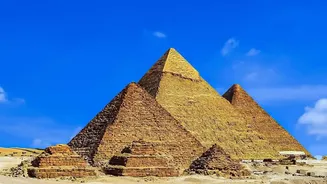
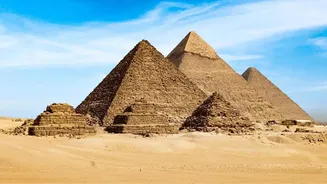
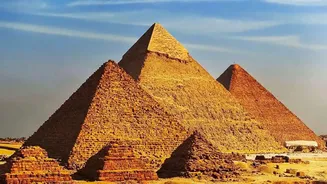
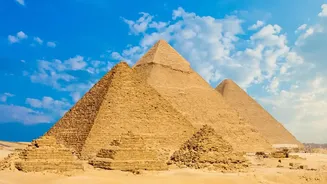
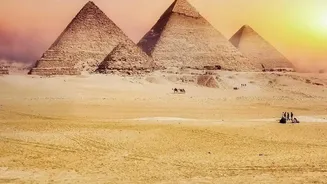
Across the Nile from Luxor lies the West Bank, the necropolis of ancient Thebes where pharaohs were laid to rest. The most famous site here is the Valley of the Kings, a desert wadi containing over 60 known tombs, including that of the famous Tutankhamun. While the pyramids were grand external statements, these tombs were designed to be hidden, with their treasures and intricate art concealed deep within the earth. A standard ticket allows entry into three of the rotating open tombs, where you can descend into corridors painted with vibrant scenes of mythology and daily life. Nearby, the terraced Temple of Queen Hatshepsut, honouring one of Egypt's few female pharaohs, stands as a masterpiece of ancient architecture.
Aswan and the Island Temple of Philae
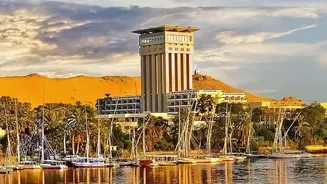
Further south, the city of Aswan offers a more relaxed pace and its own set of historical wonders. The star attraction is the Temple of Philae, dedicated to the goddess Isis. This beautiful and graceful temple is unique for its location on an island in the Nile. To save it from the rising waters of the Aswan High Dam, the entire complex was painstakingly moved to its current location on Agilkia Island. A short boat ride to the island adds to the magical experience of visiting this rescued treasure, which blends Egyptian, Roman, and Greek architectural styles.
Abu Simbel: A Monument to Power
At the southernmost edge of Egypt, near the border with Sudan, lie the magnificent temples of Abu Simbel. Carved out of a mountainside by Pharaoh Ramses II, this UNESCO World Heritage site is a testament to his power and ego. Four colossal statues of the seated pharaoh guard the entrance to the main temple. The entire complex was an incredible feat of ancient engineering, aligned so that twice a year, sunlight penetrates the inner sanctuary. In a modern marvel of engineering, the temples were relocated in the 1960s to save them from the flooding caused by the Aswan High Dam, a story that adds another layer of significance to any visit.
Dendera & Abydos: The Hidden Gems
For travellers with more time, a trip to the temples of Dendera and Abydos offers a chance to see some of the best-preserved sites in Egypt with fewer crowds. The Temple of Hathor at Dendera is famous for its stunningly preserved ceiling, where intricate reliefs depict the sky goddess Nut and the signs of the zodiac in vibrant blue. Abydos was one of ancient Egypt's oldest and most important religious centres, the cult centre for Osiris, god of the afterlife. The Temple of Seti I here contains the famous Abydos King List, a chronological list of Egyptian rulers that has been invaluable to historians.