

A Universe Set in Stone
Before the 17th century, European understanding of the cosmos was dominated by the ideas of ancient Greek philosophers like Aristotle and Ptolemy. They envisioned a universe with the Earth at its center, surrounded by a series of nested, crystalline spheres.
The Sun, Moon, and planets each had their own sphere, but beyond them lay the final sphere of the 'fixed stars'. This celestial realm was considered perfect and, most importantly, immutable. Change, decay, and imperfection were believed to be phenomena exclusive to the earthly domain, below the Moon. This worldview was not just a scientific model; it was a deeply ingrained philosophical and theological doctrine that had stood for over 1,500 years.
The Star That Shouldn't Exist
In early October 1604, observers across Europe and Asia noticed a startling new object in the constellation Ophiuchus, the Serpent Bearer. It grew rapidly in brightness until it outshone every star in the night sky and even the planet Jupiter. For several weeks, it was so brilliant it was visible during the daytime. Among its most dedicated observers was the German astronomer Johannes Kepler, who began his detailed study on October 17. To him, and others, this was a 'stella nova'—a new star. Its appearance was a direct contradiction to the Aristotelian idea that the heavens could not change. This wasn't a passing comet; it was a fixed point of light where none had been before.
Measuring the Impossible
The critical question was determining the star's location. If it were a phenomenon within Earth's atmosphere or even somewhere between the Earth and the Moon, the Aristotelian model could remain intact. The key was to measure its parallax—the apparent shift in its position when viewed from different locations. Just as a finger held in front of your face seems to move against the background when you close one eye and then the other, a nearby celestial object should show a similar shift when observed from different points on Earth. Kepler, building on methods used by Tycho Brahe for a similar event in 1572, made meticulous measurements. The result was stunning: the new star showed no discernible parallax. This was mathematical proof that it was not close by, but was situated far beyond the Moon, in the supposedly unchangeable realm of the fixed stars.
A Nail in the Coffin of Old Ideas
Kepler published his extensive findings in his 1606 book, 'De Stella Nova' ('On the New Star'). The book was more than a collection of observations; it was a direct assault on an ancient worldview. The appearance of a new star, proven to be in the celestial sphere, was irrefutable evidence that the heavens were not eternal and unchanging. This event didn't happen in isolation. It followed the 1572 supernova observed by Tycho Brahe and coincided with the groundbreaking telescopic discoveries of Galileo Galilei, who also used the 1604 event to challenge Aristotelian cosmology. Together, these observations shattered the crystalline spheres, both literally and figuratively. They demonstrated that the universe was a dynamic, evolving place, subject to dramatic events like the birth and death of stars.
A Legacy of Change
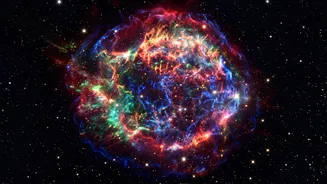
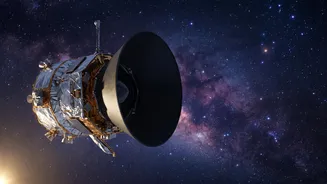
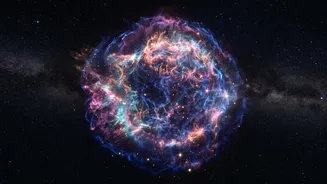
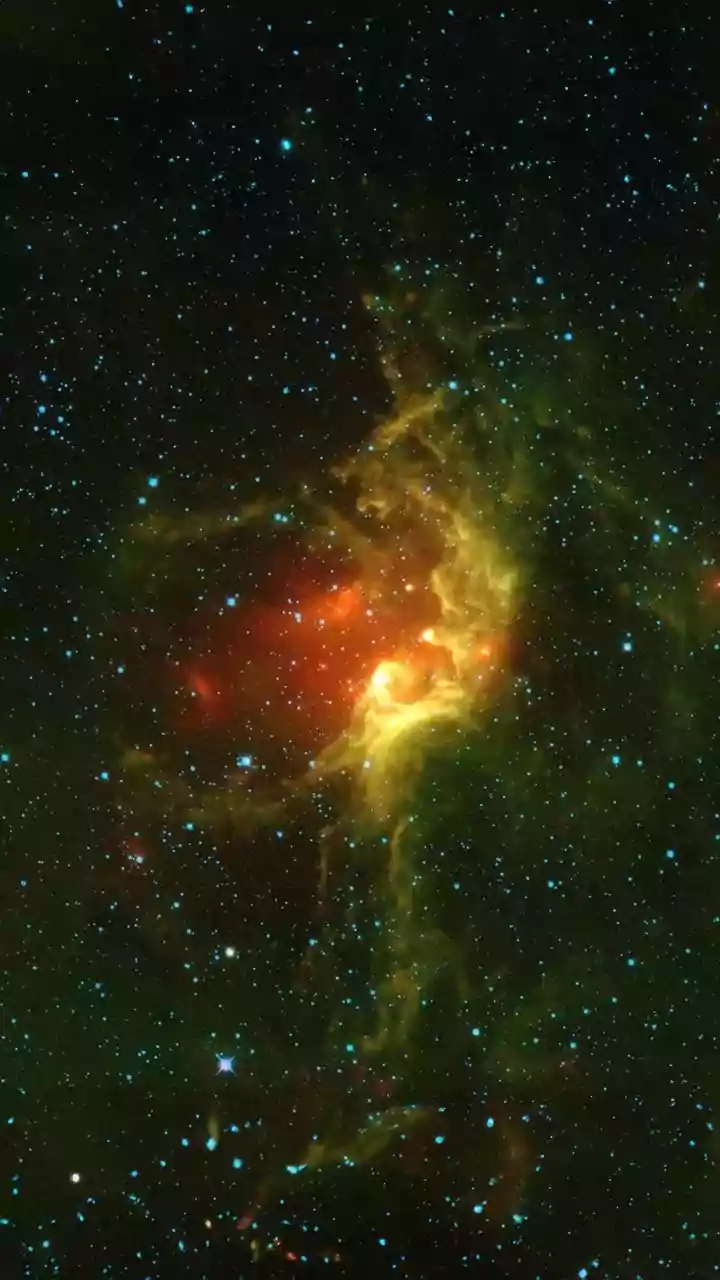
Today, we know that Kepler's 'new star' was actually the explosive death of a star in what is called a Type Ia supernova. It was the last supernova observed within our own Milky Way galaxy. The remnant of this massive explosion is still studied by astronomers using advanced tools like the Chandra X-ray Observatory to understand the life cycle of stars. But its historical impact remains profound. By providing concrete, measurable evidence against a long-held doctrine, Kepler's Supernova helped usher in a new era of empirical, observation-based science. It armed a generation of revolutionary thinkers with the proof they needed to argue for a new model of the cosmos—one where Earth was not the center, and the heavens were a place of constant transformation.