



The Core-Shoulder Connection
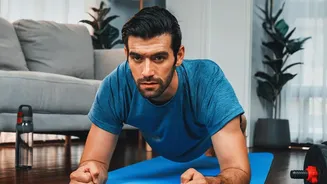
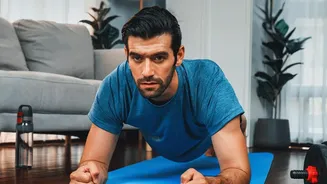
Many of the most popular core exercises, like planks, push-ups, and even some variations of mountain climbers, are weight-bearing. This means they require you to support your body weight on your hands and arms. While excellent for building strength, they place
significant pressure directly on the delicate shoulder joint. If you have a pre-existing sensitivity, rotator cuff issue, or shoulder impingement, these movements can cause a painful pinching sensation. This happens because the tendons and soft tissues can get compressed in the narrow space within the shoulder joint. Often, when our core is not yet strong enough to properly stabilize the trunk, we unconsciously compensate by recruiting other muscles—namely, our shoulders and neck—to hold the position. This leads to strain, poor form, and ultimately, pain that sabotages your fitness goals.
Scaling vs. Modifying for Pain
Here’s a crucial distinction many people miss. A beginner without pain might scale an exercise to make it easier—for example, performing a plank on their knees instead of their toes. This reduces the overall load but still requires the shoulders to act as primary stabilizers. For someone with shoulder pain, this scaling doesn't solve the underlying problem. The joint is still being loaded, and the source of the irritation remains. This is where modification becomes essential. Instead of doing an easier version of a painful exercise, the smarter approach is to choose a completely different movement that strengthens the core without loading the shoulders at all. The goal is to isolate the core muscles without asking the shoulders to do a job they aren’t prepared for.
What 'Engaging Your Core' Really Means
Part of the solution lies in understanding what your core truly is. It's not just the 'six-pack' muscles (rectus abdominis) on the surface. Your core is a 360-degree support system that includes your deep abdominal muscles (transverse abdominis), back muscles, diaphragm, and pelvic floor. Engaging it properly isn't about sucking in your stomach or holding your breath. A simple way to feel it is to lie on your back with your knees bent. Exhale slowly and imagine gently drawing your belly button toward your spine without tensing your neck or shoulders. You should feel a subtle tightening deep in your abdomen. This is the foundation of a strong, stable core, and you can build on it with exercises that don't involve your shoulders.
Alternative 1: The Dead Bug
The dead bug is a powerhouse for building deep core stability without putting any pressure on your shoulders. Lie on your back with your arms extended toward the ceiling and your knees bent at a 90-degree angle over your hips. Press your lower back gently into the floor. On an exhale, slowly lower your right arm and left leg toward the floor simultaneously. Go only as far as you can without your lower back arching. Inhale to return to the starting position, then repeat on the other side with your left arm and right leg. The key is to keep your torso completely still, forcing your core to do all the work.
Alternative 2: The Glute Bridge
The glute bridge is fantastic for activating your entire posterior chain—glutes, hamstrings, and lower back—which is a vital part of your core. Lie on your back with your knees bent, feet flat on the floor about hip-width apart, and your arms resting by your sides. Squeeze your glutes and lift your hips off the floor until your body forms a straight line from your shoulders to your knees. Avoid arching your back; the work should come from your hips. Hold for a moment at the top, then slowly lower your hips back down. This movement strengthens the muscles that support your spine and pelvis with zero shoulder involvement.
Alternative 3: The Bird-Dog
While the bird-dog starts on all fours, it teaches you to engage your core to resist rotation, a key function for stability. The load on the shoulders is minimal and can be managed easily. Start on your hands and knees with a flat back. Engage your core by drawing your belly button in. Extend your right arm straight forward and your left leg straight back, keeping your hips and shoulders level. Imagine balancing a cup of water on your lower back. Hold for a second, then return to the start and repeat on the other side. This exercise is about control, not speed, and it builds coordination between your core, hips, and back.