




A Curious Postcard from Gale Crater
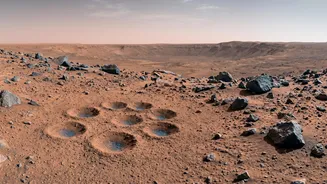
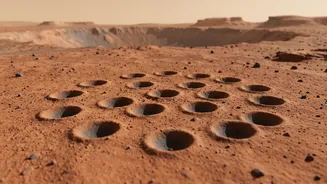
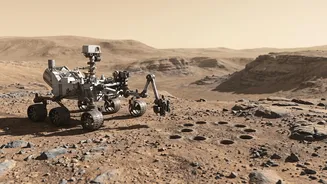
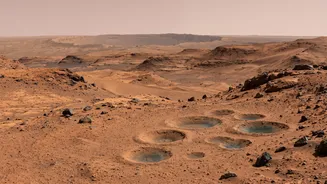
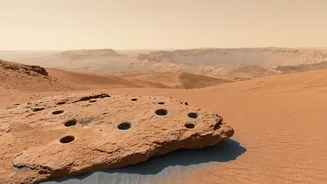
While climbing through a broad valley known as Valle Grande on Mount Sharp, the Curiosity rover spotted something unusual dotting the rocky ground. The rover's cameras captured images of small, shallow divots in the bedrock, each about a centimeter in diameter.
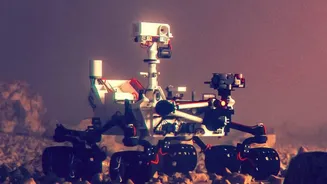
Holes on Mars are not new; the planet is constantly bombarded by meteorites that leave impact craters. But these pits were different, intriguing the mission's science team enough to halt the rover for a closer inspection. Using its Mars Hand Lens Imager (MAHLI) for a close-up and its Mastcam for wider, overlapping stereo images, NASA is now building 3D models to study the features in detail.
What Makes These Holes So Strange?
The mystery isn't the existence of holes, but their specific characteristics. According to NASA scientists, these pits are much broader and shallower than other erosional features seen in the past. Normally, small cavities in Martian rock are explained by a straightforward geological process: a hard pebble or mineral nodule gets embedded in softer rock. Over eons, the softer surrounding material erodes away, and eventually, the harder nodule falls out, leaving a small hole behind. The problem with this new discovery is that the explanation doesn't quite fit. There are no obvious pebbles or nodules nearby that look like they once occupied the divots. Without the "smoking gun" of a displaced rock, scientists are left to ponder what other forces could be at play.
The Hunt for a Geological Explanation
With the most common theory on shaky ground, researchers are exploring other geological possibilities. The formations could be the result of a unique erosion process not yet fully understood, or perhaps an unusual property within this specific layer of rock. The area where the holes were found is of particular interest. Curiosity is ascending through sulfate-rich layers of Mount Sharp, which is essentially a 5.5-kilometer-high mountain of sediment in the middle of Gale Crater. Each layer of this mountain tells a story about a different period in Mars's history, preserving a record of changing environmental conditions over billions of years. The team has noted that the rock layers in this region are changing rapidly as the rover climbs, with different textures and resistance to erosion. These holes may be another clue to understanding the dramatic transformations Mars underwent in its distant past.
Why This Martian Mystery Matters
While the discovery has not been linked to any form of biological activity, solving this geological puzzle is vital to Curiosity's primary mission. The rover was sent to Gale Crater specifically to search for evidence that ancient Mars could have supported life. Understanding how features like these holes form provides critical insight into the planet's history, especially the role of wind and water. For instance, some of the layers on Mount Sharp are believed to have been shaped by groundwater billions of years ago. Untangling how these newer features were created helps scientists build a more complete and accurate timeline of Mars's evolution from a potentially habitable world with lakes and streams to the cold, dry planet we see today. Every new texture and strange formation is another piece of a planetary history book waiting to be read.