









The End of the One-Job Career
The idea of joining a company and staying there for life is a relic of the past for India's youngest workers. Gen Z, born between 1997 and 2012, is entering a workforce shaped by economic volatility, and they are responding with a new strategy: the portfolio
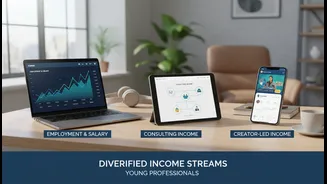
career. This doesn't just mean having a side hustle; it's a fundamental shift in mindset. Instead of relying on a single employer for financial security, they are actively building multiple income streams. This could involve freelancing, consulting, content creation, or running a small online business alongside a primary job. Recent reports show that a significant portion of this generation are pursuing these multi-job paths, not as a temporary measure, but as a long-term career design. Data indicates only 16% of Indian Gen Z professionals want a single full-time job.
Driven by Economic and Technological Shifts
This trend is not born out of a lack of focus, but out of necessity and strategic foresight. Having witnessed the economic fallout from the COVID-19 pandemic and facing rising living costs, Gen Z views dependence on a single salary as a significant risk. They are acutely aware that job security is no longer a guarantee. Compounding this is the rapid integration of Artificial Intelligence into the workplace. A recent report found that 55% of Gen Z believe AI will reshape their careers. Rather than fearing replacement, they are using this technological shift as a catalyst to diversify their skills and become more adaptable. Flexible and hybrid work models, now more common, also provide the time and opportunity needed to manage these multiple ventures.
From Side Hustle to 'Polyworking'
This new work model is often referred to as 'polyworking'—the practice of holding multiple, often overlapping, roles that are all considered equally important. It's a step beyond the traditional side hustle, which is often seen as secondary to a main job. For many young Indians, these ventures are avenues for skill development, personal fulfillment, and professional growth. A graphic designer might also be a social media consultant, or a software engineer might teach coding bootcamps on the side. This approach allows them to explore different passions while building a resilient financial base. The rise of India's gig economy, which is projected to engage 23.5 million workers by 2029-30, provides the infrastructure for this trend to flourish.
A Calculated Hedge for the Future
Building a portfolio career is a calculated hedge against an uncertain future. It provides a safety net; if one income stream dries up, others remain. This strategy also aligns with Gen Z's broader financial goals, many of whom are drawn to the principles of FIRE (Financial Independence, Retire Early). By diversifying their income, they aim to achieve financial autonomy much earlier than previous generations. This isn't just about earning more money today; it’s about creating long-term options. For many in this cohort, having multiple work identities is more secure than having one. As one young professional put it, the new career mantra is to “survive layoffs, upskill every six months, freelance on the side, and still you cannot afford a small flat.” This sentiment captures the pragmatism driving their choices.
Implications for the Indian Workplace
This fundamental shift presents both challenges and opportunities for employers in India. Companies that insist on rigid, traditional work structures may struggle to attract and retain top Gen Z talent. This generation prioritizes flexibility, autonomy, and continuous learning. Employers who can offer these, and who are open to their employees pursuing outside interests, are more likely to succeed. The rise of polyworking suggests that the future of work in India will be less about loyalty to a single company and more about a transactional relationship where skills are exchanged for compensation and opportunities for growth. Understanding this shift is crucial for any business that wants to tap into the potential of India's largest and most digitally native generation of workers.