







A Titan of Passenger Traffic
The most defining metric for any major airport is passenger volume, and Delhi's numbers are staggering. According to the latest Airports Council International (ACI) report for 2025, IGIA handled over 78.1 million passengers. This monumental figure placed
it as the 11th busiest airport globally and made it the only Indian airport to feature in the world's top 20. This performance saw Delhi surge ahead of major international hubs like Seoul's Incheon, Los Angeles International (LAX), and Paris Charles de Gaulle in terms of passenger footfall. While its rank slipped slightly from 9th in 2024, the sheer volume of travellers underscores its critical role in both domestic and international air travel. This consistent high ranking is not an anomaly but the result of steady growth and strategic expansion over the years.
The Engine of National Connectivity
Delhi Airport serves as the primary circulatory system for air travel within India. A significant portion of its traffic comes from transfer passengers, highlighting its importance as a hub. In May 2026, transfer passengers accounted for 27% of the airport's total traffic, with the airport handling nearly 56,000 transit travellers daily. Of this, domestic-to-domestic transfers are the largest component, linking major metro cities with regional and tourism destinations across the country. The airport connects to over 160 destinations, including approximately 89 domestic and 72 international locations. This vast network, supported by major carriers like IndiGo and Air India, ensures that Delhi is not just a destination but a crucial transit point that keeps the country connected.
A Powerhouse in Global Cargo
Beyond passengers, Delhi Airport is India’s undisputed leader in air cargo. For the second year in a row, the airport handled over one million metric tonnes of cargo, reaching 1.1 million tonnes in the 2025 financial year. This represents an 11% year-on-year growth and solidifies its position as the country's largest air freight gateway. Recent data from June 2026 showed the airport handled around 100,000 tonnes for the third consecutive month. The state-of-the-art infrastructure includes advanced temperature-controlled facilities, crucial for handling sensitive goods like pharmaceuticals and perishables. With a current capacity to handle 1.8 million metric tonnes annually, scalable to 2.5 million, the airport is a vital artery for India's trade and commerce.
Infrastructure Built for the Future
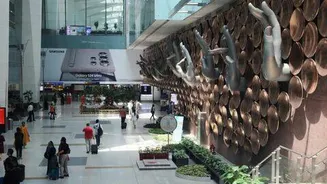
Such massive numbers are only possible because of world-class infrastructure that is constantly evolving. The airport currently operates three runways, including a 4.4km-long strip capable of handling the world's largest aircraft. Its integrated Terminal 3, one of the world's largest, has a capacity of 45 million passengers per year on its own. But the growth doesn't stop there. A master plan is in motion to increase the airport's total annual capacity from the current 106 million passengers to 125 million by 2032. This expansion includes constructing a new pier at Terminal 3 and exploring plans for a future Terminal 4, which could push the total capacity to a remarkable 140 million passengers. These developments ensure that Delhi Airport is not just keeping pace with demand but actively preparing for the future of aviation.