








A New Gateway to the Himalayas
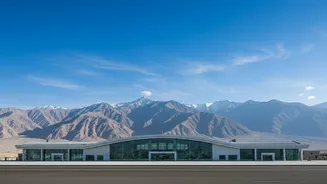
The centrepiece of the ambitious modernisation is a new, state-of-the-art terminal building. Spread over approximately 19,000 square metres, the facility is designed to dramatically increase the airport's capacity to handle the growing influx of tourists
and strategic movements. Once complete, the airport will be able to manage up to 3.5 million passengers annually, a significant jump from its current capacity. The new terminal is expected to handle up to 54 flights a day, nearly tripling the current operational ability and easing congestion, particularly during peak tourist season. The design itself pays homage to Ladakhi culture, with an architectural form inspired by traditional stupas and elements that give visitors an immediate sense of place.
Engineering Against the Elements
Constructing a modern facility at such an extreme altitude presents a unique set of engineering hurdles. The project, which began in 2019, has contended with Ladakh's harsh climate, where the workable construction season is limited to just a few months each year due to severe winters. Temperatures can plummet far below freezing, affecting both machinery and materials. Workers and equipment must function in thin air, which reduces efficiency. Arranging labour and transporting heavy materials through difficult mountain passes adds another layer of complexity and cost to the project. Despite these obstacles, construction has progressed steadily, with officials reporting that over 80% of the physical work was complete as of mid-2026.
Pioneering Sustainable Technology
Beyond its scale, the Leh airport project is a showcase for sustainable innovation. It is set to become India's first airport to be powered by a hybrid system of geothermal and solar energy. A large-scale geothermal system, using underground borewells, will provide energy-efficient heating and cooling for the terminal building—a critical need in a region of such extreme temperature swings. This ground-source heat pump system is a pioneering initiative for an Indian airport and will drastically reduce the facility's carbon footprint and reliance on conventional energy. Combined with a rooftop solar power system, the new terminal is aiming for a high GRIHA (Green Rating for Integrated Habitat Assessment) 4-star rating, setting a new benchmark for green infrastructure in the country.
Strategic and Economic Importance
Leh's airport has always been more than just a civilian facility; it is a vital military airfield of immense strategic importance for India’s northern borders. The modernisation project enhances this dual-use capability. The plan includes increasing the number of aircraft parking bays from two to six by demolishing the old terminal, which will allow for quicker turnaround times and smoother operations for both military and civilian flights. For the region of Ladakh, which is cut off by road for several months during winter, the airport is a crucial year-round lifeline. The enhanced capacity is expected to provide a major boost to the tourism-based economy, creating new opportunities and supporting local livelihoods by enabling a greater flow of visitors.