




A Record-Breaking Milestone
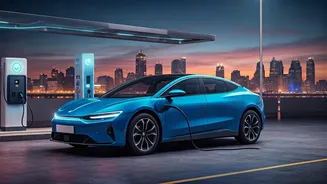
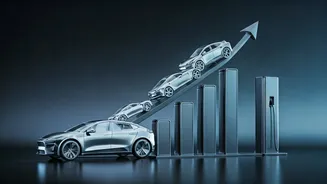
The single strongest piece of proof arrived with the June 2026 sales figures. For the first time in history, India’s electric passenger vehicle industry crossed 30,000 units in a single month. Automakers delivered 31,253 EVs to customers, representing
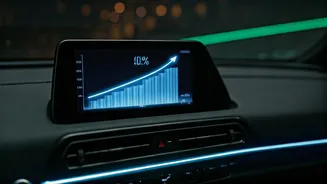
a stunning 106% increase compared to the same month last year. This isn't just a minor jump; it's a new benchmark that signals a fundamental shift in consumer demand and market momentum. The previous sales records set in prior months were not just broken but decisively shattered, establishing a new baseline for what is possible and turning a gradual incline into a steep climb. This figure proves that the electric vehicle market is rapidly moving beyond early adopters and into the mainstream.
The Homegrown Champions Leading the Charge
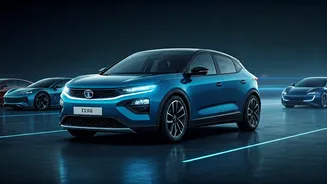
Powering this surge are India's own automotive giants, who are dominating the burgeoning market. Tata Motors, the undisputed leader, had a phenomenal month, selling over 12,000 EVs — a first for the company and a 125% year-on-year growth. This performance gives Tata a commanding 38% share of the entire EV market. Its strategy of offering a diverse portfolio, from the accessible Tiago EV to the popular Nexon EV and the recently launched Punch EV, is clearly resonating with a wide range of buyers. Not far behind, Mahindra & Mahindra also recorded its best-ever month, selling over 7,600 electric SUVs. The strong performance of these two domestic players demonstrates a deep understanding of the Indian consumer and an ability to leverage a formidable manufacturing and distribution network to meet rising demand.
The Policy Backbone
This market acceleration didn't happen in a vacuum. It is the direct result of a concerted, multi-year policy push by the government. Schemes like FAME (Faster Adoption and Manufacturing of Electric Vehicles) and Production Linked Incentives (PLI) have laid a crucial foundation by making EVs more affordable and encouraging local manufacturing. More recently, state-level policies have added powerful momentum. Delhi’s newly notified 'EV Policy 2.0' is a prime example, introducing aggressive mandates that will phase out the registration of new petrol and CNG two-wheelers and three-wheelers by 2028 and 2027, respectively. By combining subsidies, tax waivers, and clear regulatory deadlines, governments are creating an ecosystem where choosing an EV becomes an increasingly logical and financially sound decision for a growing number of people.
A Widening Competitive Field
While homegrown heroes lead, the market is no longer a two-horse race. The June sales data also highlighted the growing presence of other major players, a sign of a maturing and healthy market. JSW MG Motor India held its ground as a strong number three, while India's largest carmaker, Maruti Suzuki, saw its highest-ever monthly sales for its first electric model, the e-Vitara. Furthermore, international brands like BYD from China and VinFast from Vietnam also posted their best-ever sales numbers in India, signaling their intent to capture a slice of this fast-expanding pie. This widening field of competitors is excellent news for consumers, as it promises more choice, more innovation, and more competitive pricing in the months and years to come.
The Road Ahead for the Indian EV Owner
Despite the celebratory sales figures, challenges undoubtedly remain. The upfront cost of EVs is still a significant hurdle for many, and the expansion of public charging infrastructure needs to keep pace with vehicle sales. Range anxiety, though diminishing with newer models, is still a consideration for potential buyers. However, the June 2026 milestone is more than just a number; it is a powerful signal to the entire ecosystem. It tells automakers to double down on investments, encourages finance companies to offer more attractive loans, and pushes charging network operators to expand faster. For the average Indian car buyer, this momentum means the question is shifting from 'if' they will own an EV to 'when'. The proof is in: the electric wave is no longer coming; it's here.