
Venus at Its Most Brilliant
Venus is the undeniable star of the early evening sky this month. Often mistaken for an airplane, this planet will be impossible to miss. On September 14, the thin waxing crescent Moon will pass very close to Venus, creating a stunning pair in the western
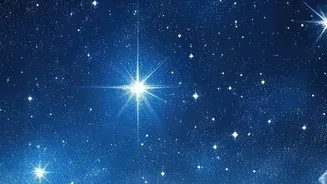
sky just after sunset. This sight requires no special equipment at all. Venus reaches its peak brilliance on September 18, appearing as a dazzling point of light. Just find a clear view of the western horizon as twilight fades, and you'll be rewarded with the brightest object in the sky after the Sun and Moon.
A Minor Meteor Shower with Major Potential
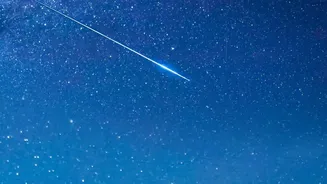
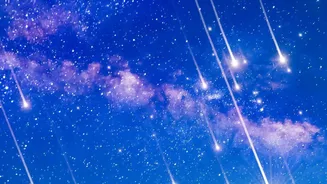
While not as famous as the August Perseids, the September Epsilon Perseid meteor shower offers a great excuse for some late-night skywatching. Peaking on the night of September 9 and into the early morning of September 10, this shower is special this year because of its viewing conditions. The peak coincides with the days leading up to the New Moon, meaning the sky will be exceptionally dark, making it easier to spot the 5-8 meteors expected per hour. For the best show, find a spot away from city lights, let your eyes adjust for about 20 minutes, and look towards the constellation Perseus in the northeast after midnight.
The Harvest Moon's Golden Glow
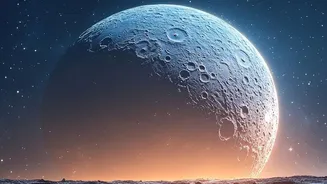
The full moon on September 26 is the famous Harvest Moon, so named because it is the closest full moon to the autumn equinox. This moon is special because it rises around the same time near sunset for several evenings in a row, historically providing farmers with extra light to bring in their crops. You can enjoy the view on the nights of September 26 and 27. As it rises, it will likely appear large and take on a beautiful golden-orange hue due to its light passing through more of Earth's atmosphere. Look towards the eastern horizon at sunset to catch this magnificent sight. Adding to the spectacle, the planet Saturn will be visible nearby.
The Quiet Arrival of Autumn
The September equinox, which falls on September 22 or 23 depending on your time zone, marks the official start of autumn in the Northern Hemisphere. While not a visual event you can watch in a single moment, it's a celestial milestone when the Sun crosses the celestial equator from north to south. From this day forward, nights will become longer than days. For skywatchers, this is a welcome change, offering more dark hours to explore the cosmos. Use this time to appreciate the changing seasons and the southward shift of the Sun's path across the sky.
Planet Spotting Without a Telescope
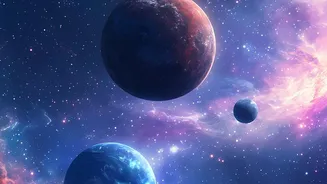
Beyond the brilliance of Venus, other planets are also making an appearance. Mars is visible as a reddish point of light in the pre-dawn sky, rising in the east. On the morning of September 8, a waning crescent Moon will form a tight pairing with the giant planet Jupiter, creating a beautiful sight before sunrise. While some occultations this month are only visible from specific parts of the world, these planetary meet-ups can be enjoyed from many locations with just your eyes. The key is to know when and where to look—typically in the east before sunrise or the west after sunset.