

The Ghost of a Sun-Like Star
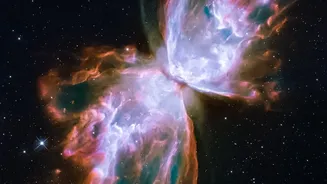
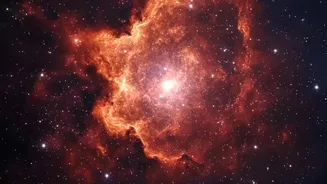
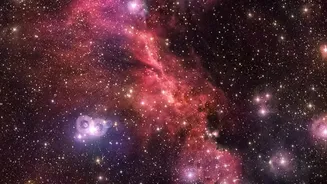
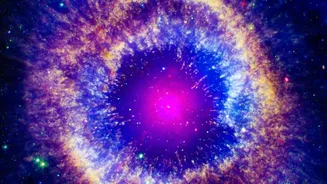
Despite its fierce nickname, the Lion Nebula, officially known as NGC 2392, is not a stellar birthplace but the beautiful aftermath of a star's death. Located thousands of light-years from Earth, it is a planetary nebula—an expanding, glowing shell of gas
and dust shed by a star similar to our own Sun as it ran out of fuel. For thousands of years, the outer layers of this dying star have been pushed out into space. At its heart sits what's left behind: an incredibly hot and dense stellar core called a white dwarf. This stellar remnant, which appears like the 'nose' of the lion, is fiercely irradiating the material it once cast off, sculpting the complex shapes we now see.
A New View Through Infrared Eyes
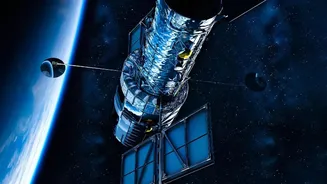
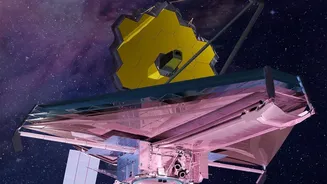
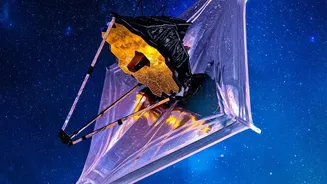
While the Hubble Space Telescope gave us iconic views of the Lion Nebula in the past, the James Webb Space Telescope's power lies in its ability to see the universe in infrared light. This allows it to peer through the obscuring layers of gas and dust that are opaque to visible light. The new image is a composite, combining data from two of Webb's key instruments: the Near-Infrared Camera (NIRCam) and the Mid-Infrared Instrument (MIRI). By fusing these different wavelengths, astronomers can create a more complete picture of the nebula's physics, separating hot gas from cool dust to understand the forces at play.
Deconstructing the 'Mane'
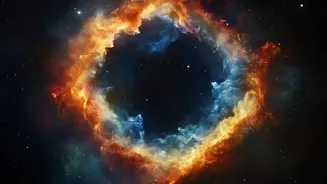
The incredible detail in Webb’s image comes from how its instruments work together. NIRCam captures the hotter gas being energized by the central white dwarf, revealing the cavernous bubble that forms the lion’s 'face'. This expanding bubble of ionized gas is so powerful it destroys most of the dust in its path. MIRI, however, excels at detecting the cooler, surviving structures. The intricate, filamentary 'mane' is composed of dense clumps of dust that have so far withstood the onslaught of radiation from the central star. These clumps create dramatic, comet-like tails, as they shield the material lying behind them from the fierce stellar wind. In the composite image, these different components are assigned colours that allow scientists to map precisely where gas is being heated and where dust endures.
A Fleeting Cosmic Masterpiece
This stunning portrait of NGC 2392 is more than just a pretty picture; it is a snapshot of a dynamic and fleeting cosmic event. Planetary nebulae are relatively short-lived phenomena on an astronomical scale. The structures we seen today have taken several thousand years to form and will continue to expand and change. Astronomers estimate that in about 10,000 years, the Lion Nebula will have dispersed so much that it will fade away entirely. By studying it now, scientists can refine their models of how stars like our Sun evolve and die, a process that enriches the galaxy with heavier elements that are essential for forming new stars, planets, and even life.