



A Fracture in a Frozen Giant
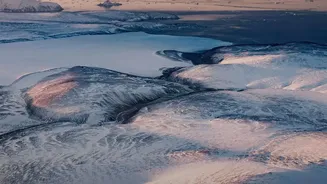
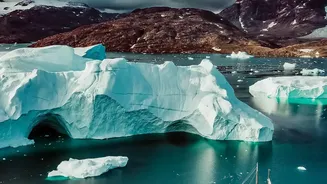
In early August 2026, the European Space Agency's Copernicus Sentinel-1 mission captured stunning and sober images from northwest Greenland. A huge section of the Petermann Glacier's floating ice tongue, measuring approximately 76 square kilometres, had
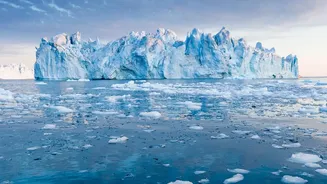
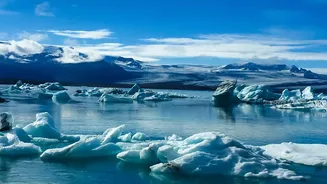
broken away. This piece of ice, roughly the size of Manhattan and up to 150 metres thick, is now a free-floating 'ice island'. The event marks the glacier's largest loss of ice since a similar major break in 2012 and is the most significant calving event—the scientific term for glaciers shedding ice—in the Arctic since 2020. Scientists, who had been monitoring growing fractures on the glacier for years, noted that this break was anticipated but remains a remarkable and powerful reminder of how quickly these vast frozen systems can change.
Why Petermann Is So Important
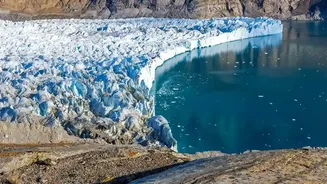
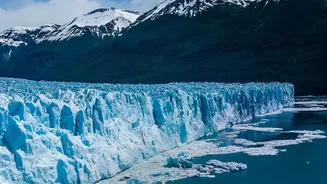
To understand the significance of this event, one has to appreciate the role of Petermann Glacier. It is one of the largest and longest glaciers in the Northern Hemisphere, acting as a crucial drainage channel for the massive Greenland Ice Sheet. Think of it as a huge, slow-moving river of ice. Its long, floating section, known as an ice tongue, extends out into the ocean. This tongue acts like a cork in a bottle, holding back the vast quantities of ice on land behind it. When large pieces of this tongue break off, the buttressing effect is reduced, which can allow the glacier on land to accelerate its flow towards the sea. This is why scientists at NASA, the ESA, and universities around the world monitor it so closely; changes at Petermann are a barometer for the health of the entire Greenland Ice Sheet.
The Science of a Glacier's Retreat
Glacier calving is a natural process. However, the frequency and scale of these events are being closely studied in the context of a warming climate. Few places on Earth are warming faster than the Arctic. This has two major effects on glaciers like Petermann. First, warmer air temperatures melt the surface of the ice. Second, and perhaps more critically, warmer ocean currents are melting the glacier from below. This process, known as basal melt, can thin the ice tongue, making it more vulnerable to cracking and breaking. Researchers have documented that Petermann's floating ice shelf has been losing mass for years, with ocean melt playing a major role. The recent break is part of a well-documented pattern of retreat and instability, with previous major calving events occurring in 2010 and 2012.
From Greenland to India's Coastline
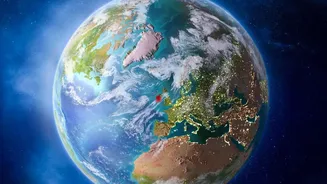
Why should an event in the remote, icy north of Greenland matter to someone in India? The answer is sea-level rise. The Greenland Ice Sheet contains an enormous amount of frozen fresh water. If it were to melt entirely, global sea levels would rise by more than 7 metres, or about 23 feet. While that extreme scenario is not imminent, the current rate of melting is already a major contributor to rising oceans. When land-based ice, like a glacier, flows into the sea and melts, it adds new volume to the ocean—unlike melting sea ice, which is already floating. This added water doesn't stay in the Arctic; it disperses globally. For a country like India with a coastline of over 7,500 kilometres and numerous low-lying major cities, even modest increases in sea level can lead to more frequent and severe coastal flooding, erosion, and challenges for coastal communities.