




The Founder at the Center
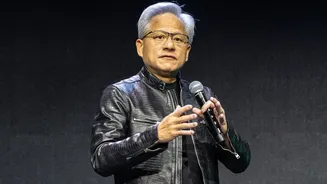
In the world of technology, few leaders are as deeply intertwined with their company's identity and success as Jensen Huang is with Nvidia. He is not just the CEO; he is the chief visionary, the primary evangelist, and the hands-on technical guide who
has shaped the company since co-founding it in 1993. Analysts describe his role as irreplaceable, pointing to a unique combination of long-term strategic foresight, technical acumen, and an obsessive focus on execution. Huang famously pivoted Nvidia from a company focused on gaming graphics to the undisputed leader in accelerated computing, the engine behind the current AI revolution. This foresight wasn't a single lucky bet but a series of decisions over many years that positioned Nvidia's GPUs as the essential hardware for training and running complex AI models. His leadership style is also unconventional, with some reports suggesting he has had as many as 60 direct reports, a flat structure designed to keep information flowing and empower teams. This makes him the central node in a sprawling network, a position that is incredibly effective but also creates significant 'key person risk'.
An AI Kingdom Built by One Man
Nvidia’s current market dominance is the direct result of Huang's strategic doctrine. He has articulated a vision where AI is not just a product but fundamental infrastructure, akin to electricity, that will power a new industrial revolution. Under his guidance, Nvidia transformed into an 'AI infrastructure company,' providing the entire stack—from GPUs and networking to software like CUDA—that enables the AI ecosystem. This strategy involves not just selling chips but building 'AI factories' and fostering a vast partner network of developers and enterprises who build their solutions on Nvidia's platform. His personal relationships, particularly with supply chain partners in Taiwan, have been described as legendary, built on loyalty and personal commitments that ensure Nvidia can execute on aggressive technological and logistical roadmaps. This hands-on approach and deep ecosystem integration have created a powerful competitive moat, but it also means much of the company's strategic and relational capital is concentrated in Huang himself.
The Succession Question Mark
The inevitable question is: who could possibly follow an act like that? For years, Nvidia has operated without a clear, publicly identified succession plan. Huang himself has expressed skepticism about formal succession planning, believing it creates unhealthy internal competition and that continuous knowledge sharing is a better approach. However, this philosophy has left investors and analysts concerned about the company's future. In the event of an unexpected departure, there is no designated heir apparent. The leadership bench is deep with talent; Colette Kress, the EVP and Chief Financial Officer, is a respected executive who has played a key role in the company's growth. Other key figures include founder Chris Malachowsky and the creator of CUDA, Ian Buck. Yet, replacing a founder-CEO is fundamentally different from replacing a hired executive. The challenge isn't just finding someone with the right operational skills but finding a leader who can carry the founder's unique vision, cultural authority, and industry-wide influence.
Navigating a Post-Huang Future
A hypothetical departure would undoubtedly trigger immense uncertainty. The market's reaction would likely be severe, reflecting the immense value placed on Huang’s leadership. Beyond the initial stock shock, deeper questions would emerge about the company's strategic direction. Would a new leader maintain the same aggressive, long-term investment horizons that led to Nvidia's AI dominance? Could they command the same loyalty from employees and crucial supply chain partners? Competitors like AMD and Broadcom could see an opportunity to gain ground if Nvidia's execution falters or its strategic vision wavers. While analysts note that Nvidia has a multi-year product roadmap that provides some resilience, the 'informal operating system' that Huang created is not easily transferable. The company has a strong foundation, but a leadership transition would be its most significant test, forcing it to prove that the culture and strategy are robust enough to outlast their iconic creator.