







The Per-Serving Size Trap
Food manufacturers often use a 'per serving' size on nutrition labels that can be misleadingly small. A box of biscuits might list the nutritional information for a serving of just two or three biscuits, when many people would eat more in one sitting.
This makes the sugar and calorie content seem lower than what you might actually consume. This common marketing tactic, known as 'portion distortion', can trick you into thinking a product is healthier than it is, especially when you’re quickly glancing at the numbers in a busy supermarket aisle. Relying on these self-defined serving sizes makes it nearly impossible to fairly compare two different products.
Why 100 Grams Is the Gold Standard
To get a true comparison, always look for the 'per 100g' (or 'per 100ml' for liquids) column on the nutrition label. According to India's food safety authority, the FSSAI, most packaged foods must provide this information. This standard unit of measurement creates a level playing field. It allows you to directly compare the nutritional content of a breakfast cereal from one brand to a completely different one, regardless of their suggested serving sizes. Thinking in terms of 100g helps you see the true concentration of sugar, fibre, fat, and protein in a product, effectively telling you what percentage of the food is made up of that nutrient.
A Quick Refresher: Sugar vs. Fibre
Understanding why this comparison matters requires a quick look at what sugar and fibre do. Sugars, especially added sugars, provide quick energy but have little nutritional value. Excessive intake is linked to weight gain and an increased risk of health issues like type 2 diabetes. Dietary fibre, on the other hand, is a crucial carbohydrate that your body doesn't digest. It aids in digestion, helps control blood sugar spikes by slowing sugar absorption, and makes you feel fuller for longer, which can help with weight management. Higher fibre intake is associated with a lower risk of heart disease and other conditions. Therefore, you generally want to choose products that are lower in sugar and higher in fibre.
Putting It Into Practice: A Cereal Showdown
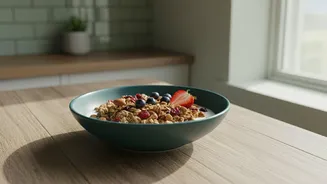
Imagine you're choosing between two breakfast cereals. Cereal A’s label boasts that it has only 7g of sugar 'per 30g serving'. Cereal B’s label shows 12g of sugar 'per 100g'. At first glance, Cereal A seems like the healthier choice. But let's use the 100g rule. To compare fairly, you need to calculate the sugar content for 100g of Cereal A. You can do this with simple maths: (100g / 30g) x 7g of sugar = approximately 23g of sugar. Suddenly, Cereal A, with 23g of sugar per 100g, is revealed to be significantly higher in sugar than Cereal B, which has 12g per 100g. The same logic applies to fibre. A good rule of thumb for a healthy cereal is to look for one with more than 3 grams of fibre and less than 8 grams of sugar per serving, but always check the 100g value for a true comparison.
Beyond the Main Numbers
Once you’ve mastered the 100g comparison, you can add another layer of nutritional awareness. Look at the ingredients list, where contents are listed in descending order by weight. If sugar (or one of its many aliases like corn syrup, fructose, or dextrose) is one of the first few ingredients, it’s a high-sugar product. Also, distinguish between 'Total Sugars' and 'Added Sugars' when the label provides it; you want to keep added sugars to a minimum. For fibre, look for whole ingredients like 'whole wheat flour' or 'oats' at the top of the list. These small details, combined with the power of the 100g rule, will transform you into a much more informed and confident shopper.