






A New Frontier for Eco-Tourism
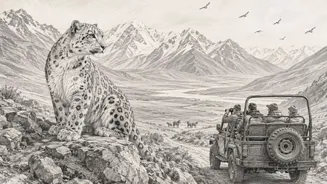
The administration of Ladakh has given the green light to an ambitious initiative to launch India's first-ever high-altitude wildlife safaris. Approved by Lieutenant Governor Vinai Kumar Saxena, the plan involves creating guided jeep safari routes through
some of the region's most ecologically sensitive areas, famous for snow leopards and a rich diversity of birds. This decision was taken during the first meeting of the newly formed Snow Leopard and High-Altitude Nature (SHAN) Conservation Society. The goal is to create a model of sustainable eco-tourism that places local communities at the heart of both conservation efforts and economic benefits, while providing visitors a unique, regulated way to experience the region's wildlife.
The 'Ghost of the Mountain' and Feathered Jewels
Ladakh is a critical habitat for some of the world's most sought-after species. It is home to India's largest population of snow leopards, with an estimated 477 of the country's 718 individuals residing in this cold desert. These majestic and secretive cats, often called the 'ghost of the mountains', are a prime attraction. Beyond the snow leopard, Ladakh is a birdwatcher's paradise, supporting over 340 bird species, including the iconic Black-necked Crane. The region is part of the Central Asian Flyway, a major migration route, making it a hotspot for sighting rare and endemic high-altitude birds, especially in the summer. The new initiative will specifically cater to both snow leopard tracking and dedicated birdwatching expeditions.
Regulating the Rush
The plan for guided safaris comes as a direct response to growing concerns over unregulated tourism. Incidents of illegal off-roading, where tourist vehicles stray from designated paths and disturb fragile habitats and wildlife, have become a serious issue. In a recent case, a tourist vehicle was seized for chasing an endangered Tibetan Gazelle within the Changthang Wildlife Sanctuary. The new safari model aims to prevent such disturbances. By using specially designed, open-back vehicles operated by trained local drivers and guides on fixed routes, the administration hopes to curb illegal activities, enhance visitor safety, and minimise the human footprint on the delicate ecosystem.
Community at the Core
A key pillar of this project is the direct involvement and economic empowerment of local communities. The plan includes training and employing local youth as guides and drivers. Initially, 20 young locals will be selected and trained in bird identification and spotting, equipped with binoculars to lead tours. Furthermore, ten birdwatching hides will be established at key hotspots to facilitate observation without disturbing the birds. The initiative also proposes training women artisans to create and sell wildlife-themed souvenirs and establishing dedicated shops for these products. This model ensures that the revenue generated from tourism directly benefits the people who are the primary stewards of the region's natural heritage.
What to Expect Next
While the plan has been approved, it is not yet operational. The Forest Department has been tasked with identifying and finalising the specific safari routes across vast areas, including Hemis National Park and the Changthang and Karakoram Wildlife Sanctuaries. Other potential areas like Nubra, Zanskar, and Kargil are also being considered. The administration has directed all departments to complete preparations before the start of the snow leopard sighting season in the coming winter. For avid birders and wildlife watchers, this means that while bookings are not yet open, the dream of a structured, responsible, and community-led exploration of Ladakh's wild treasures is closer than ever.