






The Gaganyaan Dream Takes Shape
At its core, the Gaganyaan programme is India's first human spaceflight mission. The objective is to launch a crew of three astronauts into a Low Earth Orbit of 400 kilometres for a mission lasting three days, and then bring them back safely to Earth with
a splashdown in Indian waters. Spearheaded by the Indian Space Research Organisation (ISRO), this mission will make India only the fourth country in the world—after the US, Russia, and China—to have an independent capability for human spaceflight. First announced in 2018, the programme represents a significant leap, building on decades of ISRO's success in satellite and planetary exploration. It’s not just about sending people to space; it's about demonstrating the nation's capacity to develop and manage complex, high-stakes technology from end to end.
Anatomy of a Historic Mission
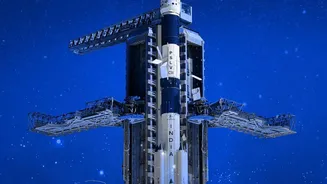
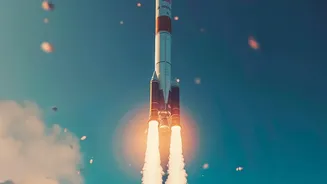
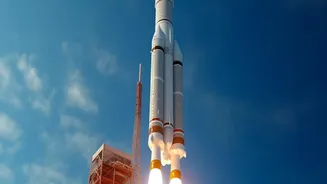
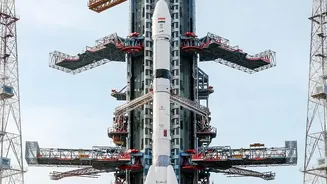
The technological backbone of Gaganyaan is a suite of indigenously developed systems designed with human safety as the paramount concern. The launch vehicle is a human-rated version of ISRO's most powerful rocket, the LVM3 (Launch Vehicle Mark 3), now designated HLVM3. This reliable workhorse has been modified with enhanced safety features. The astronauts will travel in the Orbital Module, which has two main parts. The Crew Module is a pressurised, habitable space with a life-like environment, while the Service Module contains the propulsion, power, and other support systems. One of the most critical components is the Crew Escape System, designed to jettison the crew module to a safe distance in case of any emergency during launch. Furthermore, ISRO is perfecting an Environmental Control and Life Support System (ECLSS) to manage temperature, pressure, and air quality inside the capsule.
Meet India's First Vyomanauts
The four individuals chosen for this historic endeavour are Group Captains Prasanth Balakrishnan Nair, Ajit Krishnan, Angad Pratap, and Wing Commander Shubhanshu Shukla, all distinguished pilots from the Indian Air Force. Known as 'Vyomanauts' (from the Sanskrit word 'Vyoma' for space), they have undergone extensive training to prepare for the rigours of space travel. Their initial generic training took place at Russia's Glavkosmos facility, and they are now undergoing mission-specific training at the Astronaut Training Facility in Bengaluru. This includes intense simulations in a life-sized replica of the crew module, virtual reality exercises for various mission scenarios, and survival training for post-splashdown recovery operations.
The Next Launch: Uncrewed Dress Rehearsals
Before humans embark on this journey, ISRO is conducting a series of crucial precursor missions to validate every system. The "next launch" in the Gaganyaan sequence is the first uncrewed orbital flight, designated G1, which is targeted for later this year. This mission, and a subsequent uncrewed flight (G2), will be a full dress rehearsal without astronauts. The G1 mission will carry a humanoid robot named Vyommitra. This 'female' robot can mimic crew activity, monitor module parameters, and interact with the ground control, allowing ISRO to test the spacecraft's performance in a real-world space environment before putting human lives on the line. These uncrewed flights will test the launch vehicle, orbital module, re-entry, and recovery operations, ensuring every aspect works perfectly. The success of these missions is a non-negotiable prerequisite for the final crewed launch, now anticipated in 2027.
Beyond a Single Flight
The Gaganyaan programme is envisioned as the foundation for a sustained Indian human spaceflight agenda. The long-term goals are even more ambitious, including the development of spacecraft docking capabilities and the establishment of an Indian space station, the Bharatiya Antariksh Station (BAS), by 2035. To support this vision, ISRO is already building permanent infrastructure, including a dedicated astronaut training facility named 'Gaganyatri Nivas' in Sriharikota, which will eliminate the need for future astronauts to train abroad. The programme is expected to foster innovation, create opportunities in the aerospace industry, and inspire a new generation of scientists and engineers across India.