





The ‘NATO-Style’ Security Guarantee
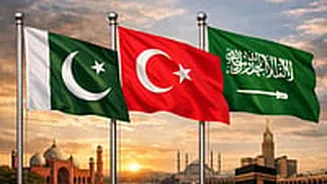
The most discussed element of the Mecca Joint Defence Agreement, signed on August 7, 2026, is its collective security principle. It states that an armed attack against one of the three signatories—Saudi Arabia, Turkey, or Pakistan—will be considered an attack against them
all. Analysts have quickly compared this to NATO's famous Article 5, and for good reason. It’s a powerful statement of intent, designed to create a strong deterrent in a highly volatile region. This pact builds upon a previous bilateral agreement between Saudi Arabia and Pakistan from September 2025. The timing is critical, coming amid heightened regional instability and a sense among regional powers that they can no longer rely solely on external security guarantees, particularly from the United States. The agreement signals a desire to move from being a 'consumer' of security to a 'producer' of it.
A Push for Strategic Autonomy
Beyond the ink on the treaty, the Mecca Agreement is a major political signal. It reflects a profound shift in the Middle East, where regional powers are actively building an independent security architecture. For decades, the regional order was largely defined by the security umbrella provided by the United States. This pact, however, is a clear move towards strategic autonomy. It's less about forming an alliance against a single specific enemy like Iran—though that is a major factor—and more about creating a flexible framework to manage a range of potential crises. Analysts describe this as a form of “strategic hedging,” where the three nations are preparing for an unpredictable future and reducing the risk of being caught by surprise. This reflects a growing trend of middle powers diversifying their partnerships to increase their room for manoeuvre on the world stage.
Forging Deeper Industrial and Tech Ties
The agreement is not just about troop commitments; it’s a framework for much deeper integration. A key, and often overlooked, aspect is the ambition for closer defence-industrial cooperation. Saudi Arabia, through its Vision 2030 plan, is aiming to localize 50 percent of its military spending and has found Turkish companies more willing to engage in technology transfer and joint production for things like drones, missiles, and armored vehicles. Turkey, in turn, sees a major opportunity to expand the market for its burgeoning defence industry, which reinforces business ties and trade networks. The pact aims to institutionalize these relationships, creating a powerful bloc that combines Saudi financial might, Turkish technological and industrial capabilities, and Pakistan's large, experienced military.
A New Diplomatic Centre of Gravity
The Mecca Agreement also seeks to create a more unified diplomatic front. By bringing together three of the most influential Muslim-majority states, the pact carries significant symbolic weight and political resonance. The goal is to coordinate foreign policy on key issues, allowing the members to speak with a stronger, more unified voice in global affairs. This creates a new diplomatic centre of gravity that could potentially rival other regional alignments, such as the one forming around the Abraham Accords. It’s a statement that the future of the region's security and politics will be increasingly shaped from within, rather than by outside powers. This coordinated approach could have a significant impact on everything from crisis management to negotiations with global powers like the United States and China.
Implications for India and the Indo-Pacific
For India, the implications are immediate and complex. The formal inclusion of Pakistan in a defence pact with two key partners for New Delhi—Saudi Arabia and Turkey—presents a new diplomatic challenge. The agreement provides Pakistan with greater strategic depth and diplomatic cover. From a broader perspective, the pact redraws the western edge of the Indo-Pacific. Any instability in the Gulf directly impacts India's energy security, the safety of its large diaspora, and the flow of trade through critical sea lanes like the Strait of Hormuz and the Red Sea. While the signatories insist the pact is not aimed at any country, Indian policymakers will be closely watching its implementation and how it affects the regional balance of power, likely responding by deepening India’s own strategic partnerships with key players in the Gulf.