






More Than Just a Conference
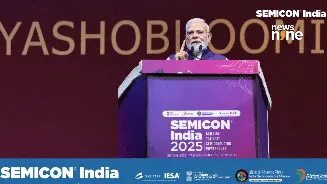
SEMICON India, now in its fifth edition, is a premier annual event that connects the entire semiconductor and electronics manufacturing supply chain. Organized jointly by the India Semiconductor Mission (ISM) and the global industry association SEMI,
the event will take place from September 17-19 at the state-of-the-art Yashobhoomi convention centre in New Delhi. The theme for 2026 is "Silicon to Systems: Building the Ecosystem," signalling India's focus on developing a comprehensive, end-to-end value chain. This gathering brings together industry leaders, policymakers, investors, researchers, and startups to forge partnerships and accelerate the country's journey towards semiconductor self-reliance.
A Global Showcase in Delhi
The headline's promise of "hundreds of exhibitors" is well-supported. The 2026 event is expected to host over 500 exhibitors, with more than 240 of them being international companies from over 40 countries. Spanning more than 15,000 square metres, the exhibition floor will feature six country pavilions and booths from 10 Indian state governments, all vying to attract investment. This diverse participation includes companies specializing in every facet of the industry: chip design, manufacturing equipment, advanced materials, and assembly, testing, marking, and packaging (ATMP) services. The presence of global giants alongside homegrown startups underscores the event's role as a critical platform for collaboration and business development.
The Engine Behind the Event: India's National Mission
SEMICON India is a direct outcome of the Indian government's strategic push through the India Semiconductor Mission (ISM). The ISM is a comprehensive programme designed to build a robust semiconductor and display ecosystem in the country, reducing reliance on imports and establishing India as a global electronics manufacturing hub. With significant financial outlays, the government is providing incentives to attract companies to set up fabrication plants (fabs), ATMP units, and design centres. The recently approved second phase, or Semicon 2.0, further expands this vision, focusing on developing the full ecosystem including equipment, materials, design, and a skilled workforce. This policy support creates a fertile ground for the kinds of investments and partnerships that are forged at events like SEMICON India.
From 'Can India Do It?' to 'How to Do Business with India'
The narrative around India's semiconductor ambitions has matured significantly. Earlier editions of SEMICON India focused on establishing the country's potential. The 2026 event's agenda reflects a new confidence. Discussions will move beyond hypotheticals to the practicalities of execution, with panels and keynotes covering AI, supply chain resilience, advanced packaging, and workforce development. A new feature, the "Sand to Silicon to Systems" Value Chain Experience, will highlight the tangible progress India is making across the entire semiconductor journey. This shift shows that global partners are no longer asking if India can become a semiconductor player, but how they can be part of its growth story.
Why It Matters for India's Future
Building a domestic semiconductor ecosystem is crucial for India's economic and strategic goals. The country's demand for chips is projected to grow to around $110 billion by 2030. Fulfilling this demand locally would create high-skilled jobs, boost exports, and enhance national security by ensuring a stable supply of critical components for defense, telecommunications, and other vital sectors. Events like SEMICON India are more than just industry meet-ups; they are crucial catalysts. They attract the foreign investment, technological know-how, and strategic alliances needed to turn ambition into reality, positioning India as a trusted and resilient partner in the complex global technology supply chain.