








From Blueprint to Building Blocks
The announcement that the Bharatiya Antariksh Station (BAS) has moved into the detailed subsystem design phase is a pivotal moment for India's space program. While the initial phase involved finalising the overall concept and baseline design, this new
stage is where the real engineering begins. ISRO scientists and engineers are now meticulously designing the individual components that will make the station function. This includes life support systems to provide breathable air and water for astronauts, power systems like solar panels, propulsion to keep the station in orbit, and the complex docking mechanisms that will allow spacecraft to connect to it. The government informed Parliament that the baseline design review for the first module, BAS-01, is complete, with 31 core design documents paving the way for this next crucial step.
India’s Address in Orbit
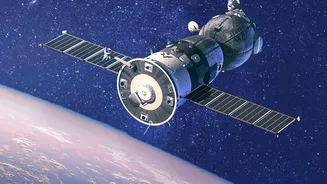
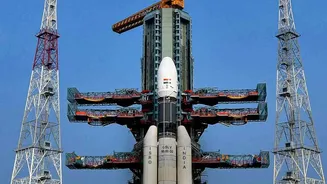
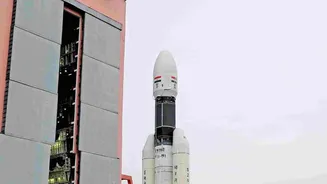
The Bharatiya Antariksh Station is envisioned as a modular outpost orbiting Earth at an altitude of about 400-450 kilometres. The full station is planned to weigh around 52 tonnes and will consist of five main modules launched sequentially. These include a base module, a core module, science labs, and a common working area. The first module, BAS-01, is a 10-tonne habitat that will serve as the foundational block, scheduled for launch by 2028 aboard an LVM3 rocket. Once fully assembled by its 2035 target date, the station will be able to host a crew of three to four astronauts for missions lasting several months, a significant leap from the shorter missions planned for the initial Gaganyaan flights.
A Stepping Stone from Gaganyaan
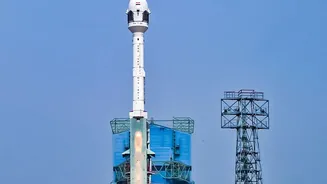
The BAS project is the logical and ambitious successor to the Gaganyaan programme, which aims to send Indian astronauts into orbit for the first time. Technologies developed for Gaganyaan, such as the human-rated launch vehicle, life support systems, and crew escape protocols, serve as the essential foundation for the space station. ISRO has successfully conducted several precursor missions to validate these systems, and the first uncrewed Gaganyaan flight, G1, is in advanced stages of preparation. While some critical components like flight suits and crew seats are currently sourced from international partners for Gaganyaan, the government has approved their indigenous development, ensuring that the BAS will be built with self-reliant technology.
A Laboratory Above the Clouds
More than just a foothold in space, the BAS is designed to be a state-of-the-art research laboratory. The microgravity environment will allow Indian scientists to conduct experiments that are impossible on Earth. Research areas will include biology, studying the effects of long-duration space travel on the human body, materials science, and Earth observation for climate studies and disaster management. The station will also act as a crucial testbed for technologies needed for even more ambitious future missions, such as sending an Indian to the Moon by 2040, a goal set by the Prime Minister. This facility will give India's scientific community a unique platform for discovery and innovation.
India Joins an Elite Global Club
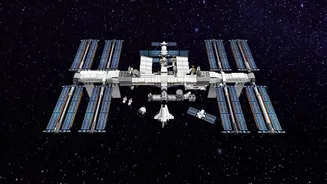
With the development of the BAS, India is set to join an exclusive group of nations capable of operating a space station, a list that currently includes the United States, Russia, and China. As the International Space Station (ISS) approaches its retirement, and with China's Tiangong station fully operational, India's entry marks a significant shift in the global space landscape. The BAS solidifies India's status as a major space power, transitioning from a nation skilled at launching satellites and probes to one capable of sustaining a human presence in orbit. This capability enhances India's strategic autonomy and opens new avenues for international collaboration on its own terms.