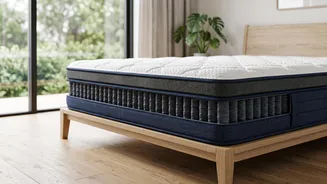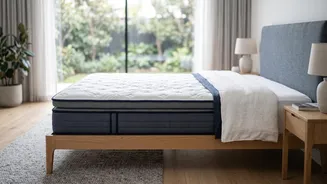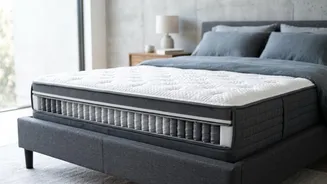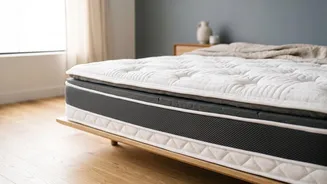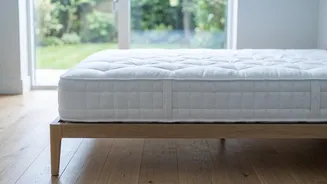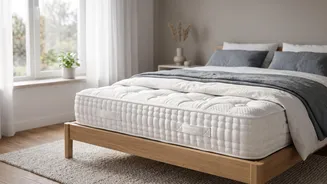






It’s a classic showroom mistake: you sink into a plush, cloud-like mattress and fall in love. But that immediate sense of softness can be deceiving. The true test of a great mattress isn't how it feels for a minute, but how it supports you all night.
The Difference Between Support and Firmness
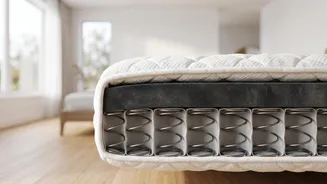
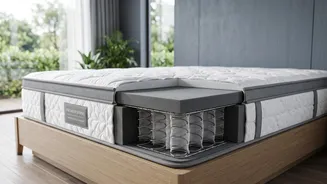
Many shoppers use the terms 'support' and 'firmness' interchangeably, but they describe two different things. Firmness is about the immediate feel of the mattress surface—how hard or soft it is. Support, on the other hand, is about the mattress's ability to keep your spine in a neutral, healthy alignment by distributing your body weight evenly. A mattress can be very soft on the surface but still have a strong, supportive core underneath. Conversely, a very firm mattress might not be supportive if it’s too rigid to conform to your body's natural curves, creating pressure points instead of relieving them.
Why Spinal Alignment Is So Important
We spend roughly a third of our lives sleeping, a crucial time for our bodies to rest and recover. Proper spinal alignment during sleep is essential for this process. A supportive mattress maintains the natural curves of your spine, which helps prevent muscle strain, reduces pressure on joints, and allows your muscles to fully relax. A mattress that lacks support can cause your spine to sag, particularly in the hip and lumbar regions. This misalignment can lead to tossing and turning, restless sleep, and waking up with stiffness, aches, and even chronic back or neck pain.
Match the Mattress to Your Sleep Position
The right level of support depends heavily on how you sleep. Each position creates different pressure points and alignment needs. Side Sleepers: This is the most common sleeping position. Side sleepers need a mattress that is soft enough to cushion the shoulders and hips, allowing them to sink in slightly. This relieves pressure while a supportive core keeps the spine straight. A mattress that's too firm can cause shoulder and hip pain for side sleepers. Back Sleepers: Sleeping on your back naturally helps with spinal alignment. These sleepers generally do best with a medium-firm mattress that supports the natural curve of the lower back without letting the hips sink too deeply. Stomach Sleepers: This position can put significant strain on the neck and spine. Stomach sleepers typically need a firm mattress to prevent the midsection from sinking, which can cause the back to arch uncomfortably.
How to Properly Test a Mattress
A quick push with your hand or sitting on the edge won't tell you what you need to know. To get a true feel for a mattress’s support, you need to lie down on it properly. Plan to spend at least 10 to 15 minutes on each mattress you are seriously considering. Lie down in the position you most often sleep in. Pay attention to how your body feels. Is your lower back supported, or is there a gap? Do your shoulders and hips feel cushioned or pressured? Ask your shopping partner to check if your spine looks relatively straight when you're on your side. Don't be shy; this is what showrooms are for.
The Role of Mattress Materials
Different materials offer different types of support and feel. Memory foam is known for its contouring ability, which can provide excellent pressure relief. Innerspring mattresses use a coil system for support, which can feel more traditional and responsive. Latex offers a supportive, buoyant feel that pushes back a bit more than memory foam. Hybrid mattresses combine coils with foam or latex layers, aiming to provide both deep support and surface comfort. A soft mattress can be supportive if its deeper layers are designed to hold your weight correctly, just as a firm one can be unsupportive if it doesn't fit your body.