




Citadels of the Golden Sands
In the vast, sun-drenched expanse of Rajasthan, forts are not just monuments; they are crowns of the landscape. Carved from sandstone and earth, these desert fortresses rise from the arid plains, their formidable walls glowing under the sun. They were
the nerve centres of powerful Rajput kingdoms, designed to command the surrounding desert and protect the legendary trade routes that passed through this region. Today, they stand as breathtaking testaments to a bygone era of royalty, resilience, and unparalleled craftsmanship.
Mehrangarh Fort: The Guardian of Jodhpur
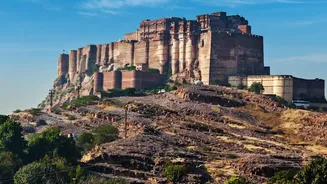
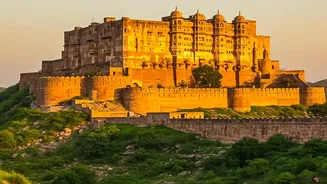
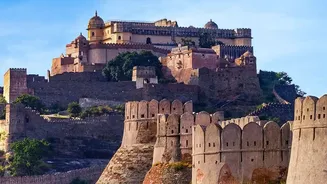
Dominating the skyline of Jodhpur, Mehrangarh Fort stands on a 400-foot-high rocky hill, its burnished red sandstone walls seeming to grow out of the very rock they are built upon. Founded in 1459 by Rao Jodha, this fort is an architectural marvel that evolved over 500 years. Its sheer scale is astonishing, with walls reaching up to 36 metres in height. Inside, a series of palaces, including the Moti Mahal (Pearl Palace) and Phool Mahal (Flower Palace), feature intricate carvings and expansive courtyards that showcase the opulence of Rajput royalty. The fort offers panoramic views of Jodhpur’s famous blue houses, creating a stunning contrast with the desert landscape.
Jaisalmer Fort: The Living Golden City
Rising like a mirage from the Thar Desert, Jaisalmer Fort is a remarkable sight. Made of yellow sandstone, it glows with a golden hue at sunrise and sunset, earning it the name 'Sonar Quila' or Golden Fort. What makes Jaisalmer truly unique is that it is one of the world's few remaining "living forts." Nearly a quarter of the old city's population still resides within its ancient walls, their homes, shops, and temples woven into the fabric of the 800-year-old structure. Walking through its narrow, winding lanes feels like stepping back in time, where daily life continues amidst centuries of history.
Bastions of the Verdant Hills
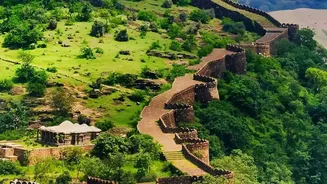
Moving away from the desert's heat, India’s fort heritage continues into its green, rolling hills. From the rugged Sahyadri mountains in Maharashtra to the granite hills of the Deccan plateau, these forts used the challenging terrain as a natural defence. Often shrouded in monsoon mist or hidden within dense forests, they served as strategic strongholds for empires like the Marathas and the Qutub Shahis. These hill forts offer not only a glimpse into military history but also stunning vistas and a refreshing connection with nature.
Sinhagad: The Lion's Fort of Maharashtra
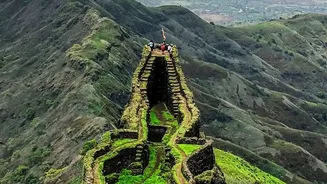
Perched on a cliff in the Sahyadri Mountains near Pune, Sinhagad is a name that resonates with Maratha pride and valour. Originally known as Kondhana, its history dates back over 2,000 years. The fort gained its current name, meaning "Lion's Fort," after the legendary Battle of Sinhagad in 1670, where Chhatrapati Shivaji's general Tanaji Malusare famously reclaimed it in a daring night-time assault. The fort's strategic location on a plateau provided a crucial military advantage. Today, its ruined gates and walls, along with memorials to its heroes, make it a popular destination for trekkers and history enthusiasts, especially during the monsoon when the surroundings are lush and green.
Golconda Fort: The Diamond Capital's Stronghold
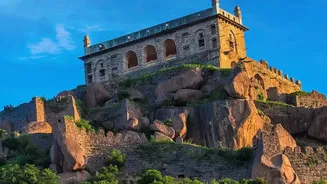
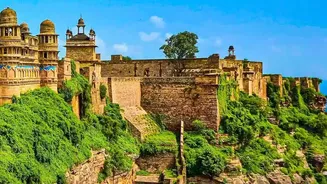
Near Hyderabad, the magnificent Golconda Fort rests on a 120-metre-high granite hill. Originally a mud fort, it was expanded over centuries by various dynasties, most notably the Qutub Shahi kings, who made it their capital. Golconda was once the heart of the world's diamond trade, producing famous gems like the Koh-i-Noor. Beyond its historical wealth, the fort is an engineering marvel. It is renowned for its sophisticated acoustic system; a clap at the main gate, the Fateh Darwaza, can be heard clearly at the citadel's highest point nearly a kilometre away, a feature designed as a warning system. Its massive ramparts, eight gateways, and majestic ruins are a testament to Hyderabad's glorious past.