



Why the Metro Dream Stalled
The core of the issue lies in a mismatch between the grand vision of a metro and the current reality on the ground. According to the Union Ministry of Housing and Urban Affairs (MoHUA), the proposals for both cities did not adequately justify the massive
investment required. The reasons cited were multifaceted, touching on population, projected ridership, and cost-benefit analysis. Under the Metro Rail Policy, 2017, a city should ideally have a population of at least two million, a benchmark both Coimbatore and Madurai fall short of based on 2011 Census data. While the Tamil Nadu government argued that the significant 'floating populations' of these industrial and tourist hubs should be considered, the Centre remained unconvinced. Furthermore, detailed project reports failed to show sufficient passenger demand or significant travel-time savings that would make a metro a clear winner over road transport for the average commuter.
BRTS: A 'Metro on Wheels' Steps In
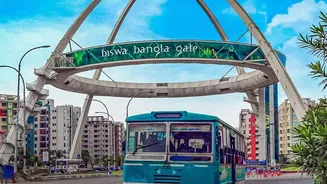
With the metro plans on hold, attention has shifted to the Bus Rapid Transit System (BRTS). This isn't just a plan for more city buses; a BRTS is a high-capacity system often described as a 'metro on wheels'. It involves dedicated, signal-free lanes for buses, elevated corridors in congested areas, and station-like bus stops that allow for quick and level boarding. The primary advantage is its significantly lower capital and operating cost compared to a metro. The Centre has specifically suggested that Tamil Nadu could explore either elevated or at-grade (ground level) BRTS corridors to meet the mobility needs of the two cities. This isn't a brand-new idea, but its time may have finally come as officials seek a viable path forward.
Cost, Speed, and Disruption: The Core Debate
The choice between a metro and a BRTS boils down to a classic trade-off between ambition and pragmatism. A metro rail system offers a higher passenger-carrying capacity and a certain prestige, but it comes with an astronomical price tag and years of disruptive construction. The proposed projects were estimated to cost over ₹10,000 crore for each city. A BRTS, on the other hand, can be implemented far more quickly and at a fraction of the cost. While its capacity is lower than a metro's, it may be better suited to the actual ridership projections for cities like Coimbatore and Madurai. The challenge for a BRTS in these cities would be acquiring the necessary road space for dedicated lanes, which is why an elevated BRTS is being seriously considered, especially in Coimbatore where many roads are too narrow for at-grade corridors. This would, however, require fresh feasibility studies and planning.
A New Blueprint for India's Growing Cities?
The situation in Coimbatore and Madurai is not unique. It highlights a broader national debate on the right approach to public transport in India's rapidly expanding Tier-2 cities. For years, the metro has been seen as the ultimate symbol of urban modernity, and dozens of cities are vying for their own network. However, this setback prompts a critical question: is a metro always the right answer? The Centre’s decision suggests a move towards a more 'right-sized' approach, where the chosen transit system is carefully matched to a city's specific needs, population density, and financial capacity. The focus may be shifting from building the most impressive system to building the most effective one. As other cities watch closely, the final decision in Tamil Nadu could set a precedent for a new, more pragmatic era of urban mobility planning across the country.