







A Landmark Investment in Connectivity
The Cabinet Committee on Economic Affairs (CCEA), chaired by the Prime Minister, has officially approved three significant multi-tracking projects for Indian Railways. With a combined budget of ₹10,783 crore, the plan involves adding approximately 656
kilometres of new railway lines. This ambitious undertaking will directly impact 14 districts spread across the states of West Bengal, Jharkhand, Odisha, Madhya Pradesh, and Chhattisgarh. The goal is to fundamentally enhance the capacity and efficiency of some of the country's most critical railway corridors, paving the way for more reliable and frequent services for both passengers and goods. The projects are scheduled for completion by the 2029-30 financial year.
Decongesting India's Economic Arteries
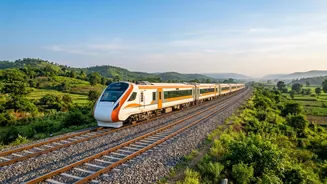
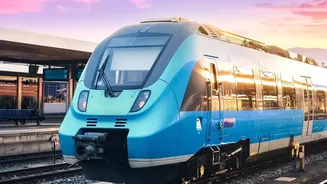
At its core, this project is about tackling congestion. Many of India's key rail routes are operating far beyond their intended capacity, leading to delays and slower speeds. The approved plan focuses on 'multi-tracking'—adding third and fourth lines alongside existing tracks. This is a strategic way to increase capacity without acquiring vast amounts of new land. The three specific projects are the Kharagpur-Jharsuguda (Bagdehi) fourth line, the Katni-Pendra Road fourth line, and the Bilaspur (Uslapur)-Pendra Road third line. By creating separate lines, railways can better manage different types of traffic, reducing bottlenecks and allowing for smoother, more predictable train operations. This move is expected to significantly improve the overall efficiency and reliability of services on these high-density routes.
What It Means for Passengers and Pilgrims
For millions of people, this project promises a tangible improvement in daily life. The expansion is set to enhance connectivity for around 4,790 villages, home to a combined population of approximately 56 lakh people. Better rail links mean easier and faster access to major towns and cities, opening up new opportunities for education, healthcare, and employment. Beyond daily commutes, the project will also boost tourism and pilgrimage. The upgraded lines will improve access to several important cultural, natural, and religious destinations, including the Shri Khetra Jagannath Temple, the Bandhavgarh Tiger Reserve in Madhya Pradesh, and the Amarkantak Temple. This will make travel more convenient for tourists and devotees alike, potentially stimulating local economies in these regions.
Powering Industrial and Economic Growth
While passenger benefits are significant, the economic impact is just as crucial. These railway corridors are vital arteries for transporting essential industrial commodities such as coal, cement, iron, and steel. Chronic congestion on these lines has long been a hurdle for industry, driving up logistics costs and creating supply chain unpredictability. By augmenting capacity, the project is expected to support an additional 27 million tonnes of freight traffic per year. This enhancement will allow for faster and more reliable movement of raw materials and finished goods, connecting industrial hubs with ports and markets more efficiently. The ultimate aim is to lower the overall cost of logistics in the country, making Indian industries more competitive.
A Strategic Piece of a National Puzzle
This railway expansion is not happening in isolation. It is a key component of the PM Gati Shakti National Master Plan, a broader government initiative focused on integrated infrastructure planning and improving logistics efficiency across the country. The plan emphasizes a holistic approach, ensuring that new railway lines, highways, and waterways work together to create a seamless network for the movement of people and goods. By investing in critical rail infrastructure, the government aims to create a ripple effect, encouraging a shift from road to more-economical rail transport for freight, reducing carbon emissions, and providing a robust backbone for India's growing economy. This project represents a strategic investment in the nation's future, designed to unlock economic potential and improve the quality of life across a vast region.