



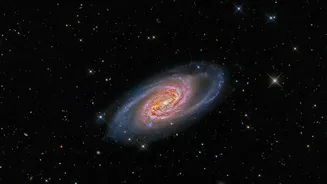
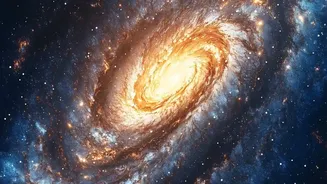
A Galaxy Out of Balance
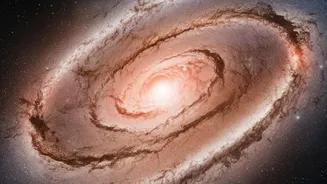
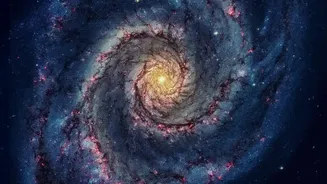
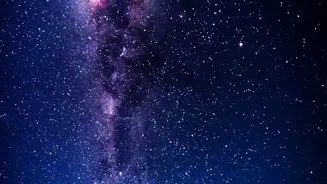
For decades, astronomers have known that the Milky Way isn't perfectly flat. Its disc, where most of our galaxy's hundreds of billions of stars reside, is warped, curving upwards on one side and downwards on the other, like a twisted vinyl record. For a long
time, the cause was a mystery. Theories ranged from the influence of a misshapen halo of dark matter to the effects of intergalactic magnetic fields. This galactic wobble, or precession, was happening much faster than those theories could account for, hinting at a more powerful cause: a direct, physical disturbance. It was clear our galaxy had been profoundly shaken by an outside force.
The Cosmic Detective Story
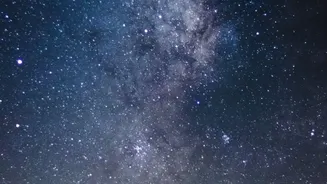
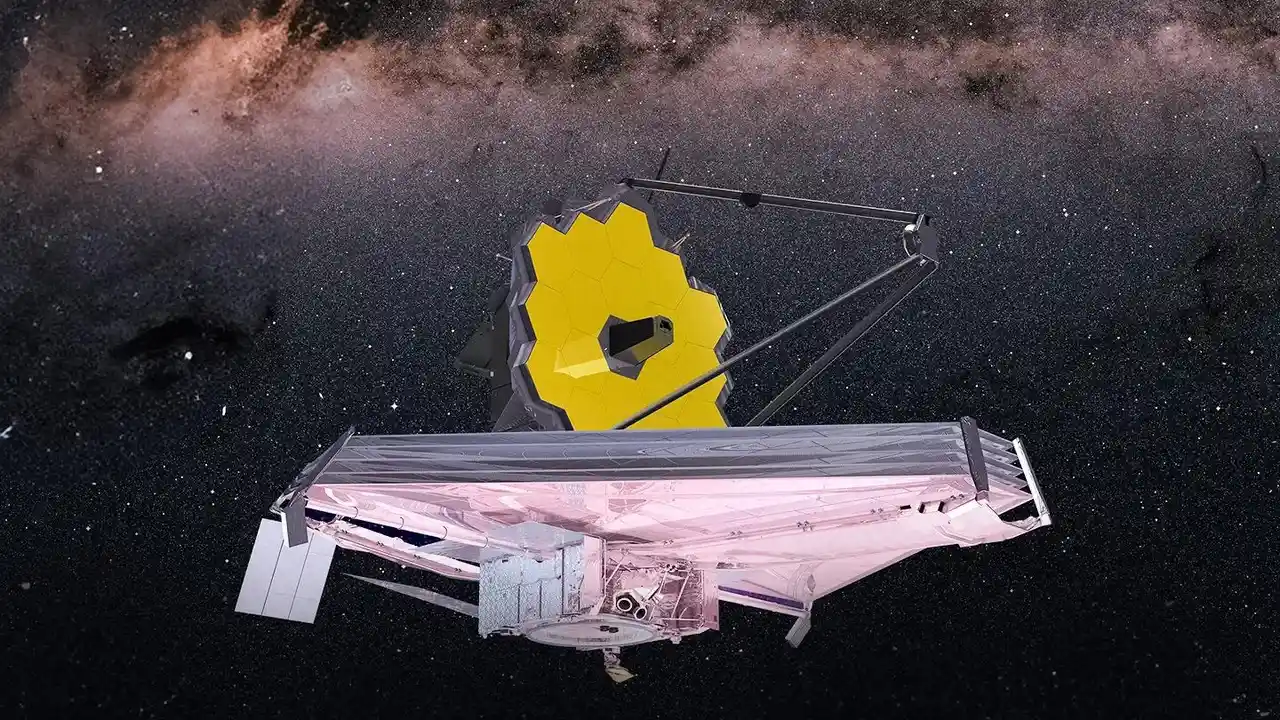
The key to solving this mystery lay in creating an unprecedented map of our galaxy. The European Space Agency’s Gaia space telescope has been the lead detective on this case. Launched in 2013, Gaia has been meticulously charting the positions, distances, and movements of nearly two billion stars. This has allowed scientists to create the first true three-dimensional picture of our galaxy from the inside out. Within this torrent of data, astronomers noticed strange patterns: ripples of stars moving in unexpected ways and a stellar halo rotating far slower than the main galactic disc. These were the clues pointing to a dramatic event in our galaxy's history.
Identifying the Intruders
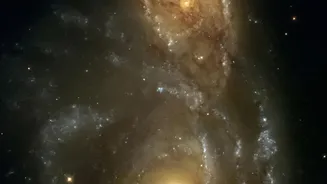
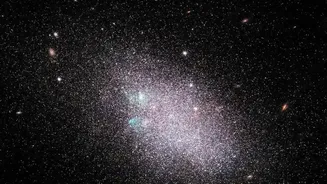
The data from Gaia pointed to not one, but two major culprits that have significantly shaped our galaxy. The first was a massive collision around 10 billion years ago with a dwarf galaxy nicknamed the Gaia Sausage. This head-on impact was so cataclysmic it may have flipped the entire disc of the young Milky Way by more than 90 degrees. The second, and more recent, culprit is the Sagittarius dwarf galaxy. This smaller galaxy has been orbiting and repeatedly smashing through the Milky Way's disc for the last six billion years, with known collisions occurring around 5.7, 1.9, and 1 billion years ago. Each pass-through acts like a stone thrown into a pond, sending ripples of energy through our galaxy.
Recreating the Cosmic Crime
To confirm these theories, astronomers turned to powerful supercomputer simulations. By modeling a head-on collision with a galaxy the size of the Gaia Sausage, researchers at Durham University found it perfectly explained the oddly slow rotation of our stellar halo. The simulations showed that such an impact would indeed cause the galactic disc to flip over millions of years. Separately, other models recreating the repeated impacts of the Sagittarius dwarf galaxy showed that these collisions triggered massive bursts of star formation. The timing of these star-making episodes in the simulations matched the peaks of star formation observed in the actual Gaia data, providing a direct link between the collisions and our galaxy's growth.
An Ongoing Collision
These galactic collisions are not single, isolated events from the distant past. The Sagittarius dwarf galaxy is still in the process of being torn apart and consumed by the much larger Milky Way. After each collision, it loses gas, dust, and stars, but it continues on its looping orbit, set to pass through our galactic plane again. The warp and wobble we see today are the continuing reverberations of these impacts. Our galaxy is a dynamic, living system, still feeling the effects of a collision that has been unfolding for billions of years and is likely still causing new, smaller bursts of star formation.
Our Place in a Violent Universe
This epic story of galactic violence fundamentally changes our understanding of the Milky Way. It reveals that our galaxy grew and evolved not just peacefully, but through violent mergers and acquisitions. In a fascinating twist, some astronomers suggest that one of the star-forming bursts triggered by the Sagittarius galaxy about 4.7 billion years ago might have been the event that led to the formation of our own Sun. While we can't be certain, it’s possible that without this ancient collision, our solar system might not exist. The tracing of this impact shows us that galaxies are not static islands, but constantly interacting and evolving structures, shaped by a history of cosmic violence.