








A New 'Drishti' for India
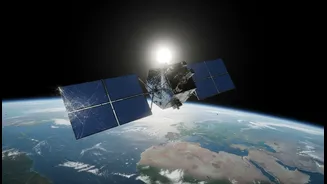
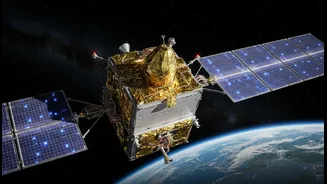
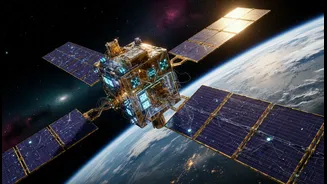
Launched on May 3, 2026, Mission Drishti was not just another satellite; it was a symbol of India's fast-growing private space sector. Developed by Bengaluru-based startup GalaxEye, it was the country's largest privately built Earth observation satellite.
Its name, meaning 'vision' in Sanskrit, was fitting. Drishti carried a revolutionary 'OptoSAR' payload, combining a high-resolution optical camera with a Synthetic Aperture Radar (SAR). This would have allowed it to see through clouds, smoke, and darkness, providing all-weather, day-and-night imagery. This capability is invaluable for everything from border surveillance and disaster management to urban planning and agriculture. The successful launch aboard a SpaceX rocket was hailed as a major milestone for Indian innovation.
The Sun's Violent Outburst
Space is not empty or benign. Our sun frequently erupts, spewing charged particles and radiation into space in events known as solar storms or Coronal Mass Ejections (CMEs). When these storms are directed at Earth, they can have serious consequences. These events can trigger powerful geomagnetic storms in Earth's magnetic field, creating beautiful auroras but also posing a significant threat to our technology-dependent world. High-energy particles can damage the sensitive electronics of satellites, while the heating of the upper atmosphere increases atmospheric drag, which can cause satellites in low-Earth orbit to lose altitude and even fall from the sky. This was famously demonstrated in 2022 when a geomagnetic storm caused the loss of dozens of newly launched Starlink satellites.
A Mission Cut Short
Mission Drishti fell victim to exactly this phenomenon. In early July 2026, GalaxEye announced that the satellite had encountered a critical anomaly following a geomagnetic storm. The company reported that initial analysis pointed to radiation from the event impacting a crucial onboard system. Communication with the 190kg spacecraft became patchy before being lost entirely. Despite ongoing efforts, the company stated that the likelihood of recovering the satellite was low, bringing a premature end to a promising mission. The incident served as a stark and costly reminder that even the most sophisticated technology is vulnerable to the raw power of space weather.
The Invaluable Lesson
While the loss of Mission Drishti is a significant setback, GalaxEye's CEO, Suyash Singh, emphasised that the mission provided invaluable engineering insights. In its few weeks of operation, the satellite successfully completed most of its initial phase, validating its design, deployment systems, and in-house mission control capabilities. The hard lesson learned from this solar storm will directly inform the development of more resilient spacecraft. The company plans to launch two new, more robust OptoSAR satellites within the next two years. This experience also highlights the importance of India’s other key space missions, like ISRO’s Aditya-L1 solar observatory. Stationed 1.5 million km from Earth, Aditya-L1's purpose is to study the sun and provide early warnings of solar storms, acting as a crucial sentinel to help protect India's growing fleet of vital space assets from a similar fate.