



An Icon at a Crossroads
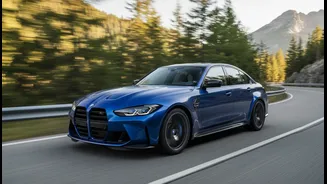
The BMW M3 has long been the benchmark for performance sedans, evolving through generations but always defined by a high-revving internal combustion engine (ICE) and a focus on driver engagement. That straightforward lineage is about to be broken. BMW has confirmed
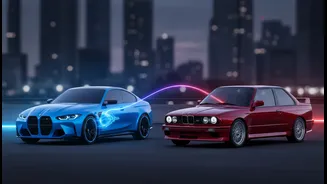
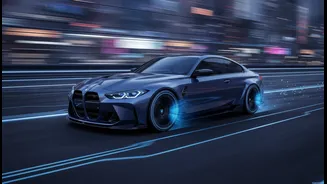
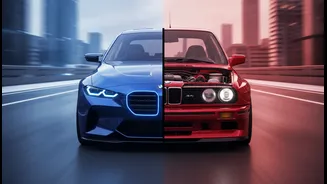
that the next generation of its most famous performance car will exist in two fundamentally different forms: a traditional petrol model and a revolutionary all-electric version. This isn't just a product decision; it's a strategic hedge that reflects the entire auto industry's uncertainty about the future of high performance in an era of electrification.
For the Purists: The Petrol Path
For those who believe the soul of an M3 is intrinsically tied to its engine, there is good news. BMW M CEO Frank van Meel has confirmed that a new petrol-powered M3 is in development. It is expected to use an updated version of the celebrated S58 3.0-litre twin-turbocharged straight-six engine, engineered to meet future emissions standards without adopting a heavy plug-in hybrid system. Instead, it will stick to a simpler mild-hybrid setup, preserving the character that fans cherish. There's even a desire within BMW to continue offering a manual transmission, a true statement of intent in a shrinking market. This car will ride on an evolution of the current CLAR platform, ensuring continuity for the brand's most loyal customers.
The Electric Shock: A Quad-Motor Future
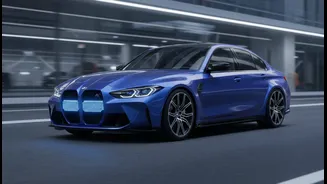
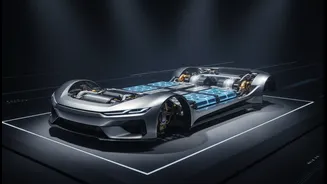
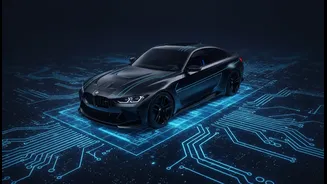
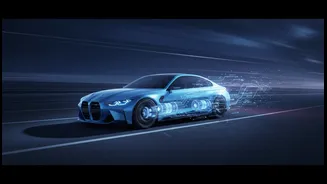
The second path is a radical departure. The all-electric M3 will be built on BMW's new, dedicated EV architecture, the 'Neue Klasse'. This version, previewed by the M Concept Neue Klasse, is set to be a technological powerhouse. Early reports and executive comments point to a quad-motor setup—one for each wheel—enabling unparalleled torque vectoring and dynamic control. While some rumors suggest a power output approaching 1,000 horsepower, BMW executives have emphasized that the primary goal is not raw power but sustained, controllable performance and handling precision. The 'Heart of Joy,' a central high-performance computer, will manage everything from power delivery to stability, aiming to deliver a driving experience that feels like a true M car, despite the absence of an engine.
Why Not Just Pick One?
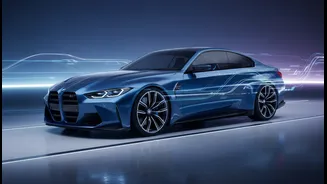
BMW’s dual-path strategy is a calculated response to a complex global market. Different regions have varying regulations and consumer readiness for electric vehicles. By offering both, BMW avoids alienating its dedicated petrolhead fanbase while simultaneously staking a claim as a leader in the high-performance EV segment. It allows the company to cater to a driver who prioritizes the familiar feel and sound of a straight-six, as well as the early adopter seeking the next leap in performance technology. As M boss Frank van Meel put it, the brand will offer the “extremes,” not an in-between compromise like a plug-in hybrid. The two cars will even share a similar design language inspired by the Neue Klasse concepts, positioning them as 'twins' with different hearts.
A Tale of Two Timelines
The rollout will be staggered. The all-electric M3, built on the Neue Klasse platform, is expected to make its debut first, with a potential arrival around 2027. Its petrol-powered sibling, an evolution of the current generation, is slated to follow around 2028. This timeline allows BMW to lead with its technological showpiece while giving the beloved combustion engine a fitting and extended farewell tour. Both models will be sold alongside each other for years, giving customers the ultimate choice in what defines a performance sedan in the coming decade.