
The Savoury Prelude: Puchka
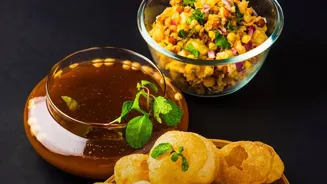
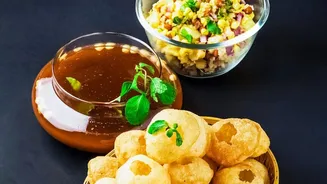
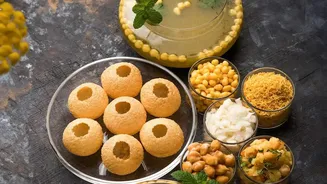
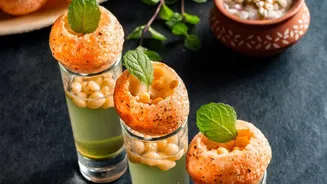
No conversation about Kolkata street food can begin without mentioning the mighty Puchka. These small, hollow, crispy spheres of fried dough are a sensation. A vendor, with lightning-fast hands, pokes a hole in the top, fills it with a spicy mixture of mashed
potatoes and chickpeas, and then dunks it into a tangy, tamarind-based water. The experience is a race against time: you must pop the entire thing into your mouth before the delicate shell gives way. It’s an explosion of flavour—spicy, sour, and utterly addictive—that sets the tone for the city's culinary landscape.
The Original Wrap: Kathi Roll
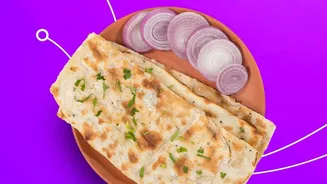
Long before wraps became a global phenomenon, Kolkata had the Kathi Roll. Its story begins in the 1930s at a restaurant named Nizam's, which was looking for a way to make its kebabs more portable for busy customers. The solution was genius: wrap the succulent, skewered kebab in a flaky, egg-washed paratha. The name itself comes from 'kathi', the Bengali word for the bamboo skewers originally used to grill the meat. Today, fillings have expanded to include chicken, mutton, paneer, and mixed vegetables, but the essence remains a hearty, satisfying, and iconic on-the-go meal.
The Quintessential Snack: Ghugni
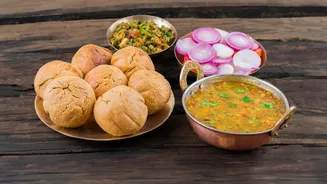
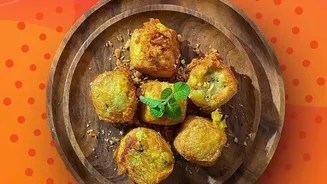
Ghugni is the ultimate comfort snack, a warm and hearty dish that's both simple and deeply flavourful. It is a curry made from dried white or yellow peas, simmered with spices until tender. Served hot from large pans on street corners, it's often garnished with chopped onions, green chillies, a sprinkle of fresh coriander, and sometimes a squeeze of lime or a drizzle of tamarind chutney. This beloved snack can be enjoyed on its own in a small bowl or as part of a more elaborate 'chaat'. It's a perfect example of how humble ingredients are transformed into something truly special on Kolkata's streets.
The Sweet Shift: Mishti Doi
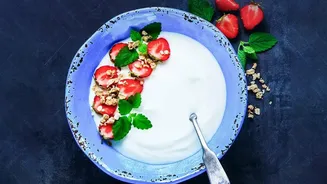
Now, we transition to the sweet side of the spectrum, starting with Mishti Doi. This isn't your average yogurt. It's a traditional sweet, fermented yogurt with a distinct caramel flavour and a dense, creamy texture. Made by reducing milk, sweetening it with sugar or date palm jaggery, and then leaving it to set in earthenware pots, the process gives it a unique, earthy aroma and a beautiful colour. Served chilled, it’s a refreshing and classic Bengali dessert that perfectly cleanses the palate after a spicy meal.
The Delicate Art: Sandesh
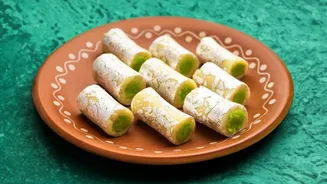
If Puchka is a flavour explosion, Sandesh is a study in subtlety and refinement. This quintessential Bengali sweet is made from fresh chhena (cottage cheese), which is kneaded with sugar until smooth. From there, the possibilities are endless. It can be simple, flavoured with just a hint of cardamom or saffron, or more elaborate, incorporating nuts, mango, or the seasonal Nolen Gur (date palm jaggery). Its texture is light and crumbly, melting in your mouth. Shops like Girish Chandra Dey & Nakur Chandra Nandy, established in 1844, have specialized in Sandesh for generations, showcasing its incredible versatility.
The Spongy Icon: Rasgulla
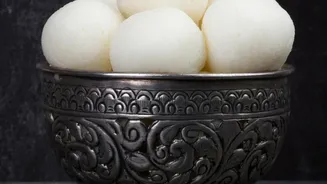
Perhaps no sweet is more synonymous with Bengal than the Rasgulla (or Roshogolla). These soft, spongy balls of chhena are cooked in a light, clear sugar syrup until the syrup permeates the entire sphere. The invention of the modern, spongy white Rasgulla is widely credited to confectioner Nobin Chandra Das in 1868, who wanted to create a unique dessert. Unlike many other Indian sweets, the Rasgulla is not overpoweringly sweet, allowing the delicate flavour of the chhena to shine through. It's a melt-in-your-mouth experience that has become a symbol of Bengali culinary pride.