





There’s nothing quite like the symphony of flavours and textures in a plate of homemade papdi chaat. But the joy can be short-lived if that crucial crunch gives way to a disappointing sogginess. How do you keep the papdi crisp to the very end?
The Foundation: Making Papdi That Lasts
The secret
to a crisp final product begins with the papdi itself. Whether you buy them or make them at home, their quality is paramount. For homemade papdi, the dough is key. It should be firm and tight, not soft like a roti dough. Adding a bit of ghee or oil and kneading it until the flour mixture resembles breadcrumbs helps create a flakier, crisper texture. Roll the dough as thinly as possible; a thicker papdi is more likely to become chewy. Crucially, before frying, prick each disc with a fork. This simple step prevents them from puffing up like puris and ensures they fry into flat, cracker-like crisps. Fry them on a medium-low heat until golden and firm, which ensures they cook through without burning.
Smart Storage for Maximum Crunch
Once your papdis are perfectly fried, proper storage is your next line of defence against moisture. Before storing, they must be completely cool. Any residual warmth trapped in a container will create steam, which is the enemy of crispness. Store them in a fully sealed, airtight container at room temperature. Never store papdi in the refrigerator, as the cool, humid environment can make them limp. For best results, place them away from any sources of heat or steam, like the stove. If stored correctly, homemade papdi can remain perfectly crisp and ready for chaat for up to a month.
Managing Your Toppings' Moisture
The toppings are where most of the moisture comes from, so managing them is essential. The biggest culprit is often the yogurt (dahi). Opt for thick, creamy yogurt rather than a thin, watery one. Whisk it well to make it smooth, but avoid adding water. Some recipes even call for Greek yogurt or hung curd to minimize liquid. Your chutneys also play a role. When preparing them for a party where the chaat might sit for a bit, aim for a slightly thicker consistency; this will prevent the papdis from getting soaked too quickly. All wet and dry toppings, from potatoes and chickpeas to onions and sev, should be prepped and kept separate until the moment of assembly.
The Art of Last-Minute Assembly
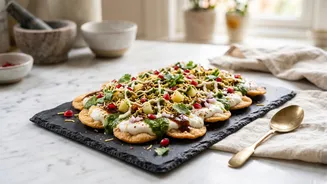
The final, and most critical, step is assembly. Papdi chaat is a dish that must be served immediately after it's made. The moment wet ingredients like yogurt and chutney touch the papdi, the clock starts ticking. For individual servings, arrange the papdis on a plate and layer the toppings quickly. Start with the drier ingredients like boiled potatoes or chickpeas, followed by the yogurt and chutneys. Finish with a generous sprinkle of sev, chopped onions, and coriander. For parties, a 'chaat board' or 'chaat dip' is a brilliant solution. Arrange a bed of the yogurt and chutneys on a platter, and serve the crisp papdis on the side. This allows guests to scoop the toppings themselves, ensuring every single bite is perfectly crunchy.