


The Sun in Disguise
When the Moon slides in front of the Sun, the sky darkens, creating a false sense of security. It feels like dusk, and your instinct might be to glance up. This is the moment of greatest danger. While the overall brightness is reduced, the part of the Sun that
remains visible is still emitting incredibly intense radiation. In fact, the dimming environment can trick your pupils into dilating, or opening wider, to let in more light. This expanded opening makes your retina, the light-sensitive tissue at the back of your eye, even more vulnerable to the concentrated solar rays that can cause severe, permanent damage. Even a 99% eclipsed sun is dangerously bright.
Sunglasses vs. Solar Radiation
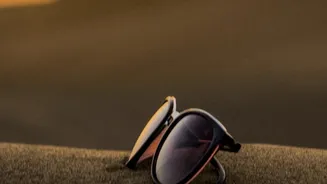
Your everyday sunglasses, no matter how dark or expensive, are designed for a completely different purpose. They are built to reduce glare and make daytime conditions more comfortable by filtering a portion of the Sun's visible light. They may also have a coating to block some ultraviolet (UV) light. However, they are thousands of times less protective than what is required for staring directly at the Sun. The Sun bombards us with not only intense visible light but also invisible infrared (IR) and ultraviolet (UV) radiation. Standard sunglasses do almost nothing to stop the sheer intensity of this radiation during an eclipse, allowing it to flood into your eye and burn the delicate cells of your retina.
The Painless Burn: Understanding Solar Retinopathy
The most terrifying aspect of eclipse-related eye injury is that you cannot feel it happening. The retina has no pain receptors. As you stare, mesmerised by the celestial event, intense light energy is literally cooking the light-sensitive photoreceptor cells. This condition is called solar retinopathy. The damage is not immediate. Symptoms can take hours or even a few days to appear. People often report a blurry central vision, a blind spot in the middle of their sight, distorted vision where straight lines look wavy, or altered colour perception. In many cases, the damage is permanent, leading to a lifetime of impaired vision.
The Gold Standard for Safety: ISO 12312-2
To view an eclipse directly, you must use special-purpose solar filters. The only way to be sure they are safe is to check for the international safety standard designation: ISO 12312-2. This standard ensures the filters reduce visible sunlight to a safe and comfortable level while also blocking harmful UV and IR radiation. These 'eclipse glasses' are not just dark; they are made with specialised filter material that is drastically more protective than any sunglass lens. However, be cautious of fakes. Simply having the code printed on a pair of glasses is not a guarantee of safety. It is crucial to purchase them from a reputable vendor of astronomical equipment or a trusted source recommended by scientific organisations.
How to Watch the Eclipse Safely
With a partial solar eclipse visible across India in August 2027, it's the perfect time to prepare. The safest options are simple. First, acquire certified ISO 12312-2 eclipse glasses or a handheld solar viewer from a trustworthy supplier. Before using them, always inspect the filter for any scratches, punctures, or tears; if it's damaged in any way, discard it immediately. An excellent and completely free alternative is indirect viewing. You can easily create a pinhole projector by poking a small, round hole in a piece of card. Stand with your back to the Sun and let the sunlight pass through the hole onto another surface, like a second piece of card or the ground. This will project a safe, small image of the eclipsed Sun that you can watch without any risk. Never look at the Sun through the pinhole itself.