






The Dawn of a New Space Era
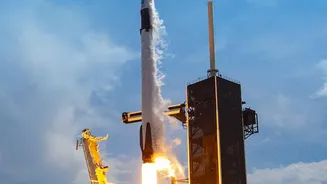
On July 18, 2026, Skyroot Aerospace made history by successfully launching its Vikram-I rocket into orbit, a first for a private Indian company. The mission, named 'Aagaman' (Arrival), marked a pivotal moment, positioning India as the third country, after
the US and China, with private orbital launch capabilities. This achievement was the culmination of years of development, building on the success of their suborbital Vikram-S rocket in 2022. Founded in 2018 by former ISRO scientists Pawan Kumar Chandana and Naga Bharath Daka, the company is at the forefront of India's commercial space race, a sector energized by government reforms in 2020 that opened the final frontier to private enterprise. Following the flawless debut, the company's goal is to scale up production to one rocket per month, a cadence that would make it a significant player in the global small satellite launch market.
The 'Mission Success' Imperative
In the high-stakes world of rocket launches, you are only as good as your last mission. The flawless performance of Vikram-I on its very first attempt was a monumental achievement that sent a powerful signal to potential customers. For satellite operators with expensive payloads, launch reliability is paramount. A successful debut instills confidence and is crucial for building a strong order book. However, the pressure remains immense. Skyroot plans a short series of test flights to validate the Vikram-1's performance and gather crucial flight data before beginning routine commercial operations. Each subsequent launch will be scrutinized, as consistent success is the only way to prove the vehicle's reliability and transition from a promising startup to a trusted launch provider. A single failure in these early days could set back its commercial ambitions significantly.
The Hunt for Customers
A factory capable of building twelve rockets a year is only valuable if there is demand for twelve launches. Skyroot's primary market is the booming small satellite sector. The company positions its Vikram-1 as a 'space taxi,' offering dedicated launches for customers who want precise orbital placements without having to rideshare on a larger rocket. This model competes directly with global players like Rocket Lab. Securing a steady stream of customers is the core commercial challenge. While CEO Pawan Kumar Chandana has noted that a significant share of their customer interest already comes from international markets, particularly Europe, the competition is fierce. The company's success will depend on its ability to translate the confidence from its successful maiden flight into a full manifest of paying customers, which in turn provides the revenue needed to sustain a high launch cadence.
Riding India's 'New Space' Wave
Skyroot's ambition is not happening in a vacuum. It is being fueled by a seismic policy shift in India. The establishment of the Indian National Space Promotion and Authorization Centre (IN-SPACe) in 2020 created a single-window agency to facilitate and regulate private space activities. This, combined with the Indian Space Policy 2023, has dismantled ISRO's former monopoly and encouraged private investment and innovation. Companies like Skyroot now have access to ISRO's world-class testing and launch facilities, significantly lowering the barrier to entry. This supportive ecosystem has led to a boom, with over 1,200 space-tech startups now registered in India. Skyroot's main domestic competitor is Chennai-based Agnikul Cosmos, which is developing its own Agnibaan rocket. This burgeoning competition is a sign of a healthy, growing industry aiming to capture a larger share of the global space economy, projected to grow from $8.4 billion to $44 billion by 2033.