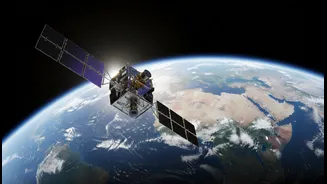










A Star Falls from the Sky
The setback centers on GalaxEye, a promising Bengaluru-based space-tech startup. On July 7, 2026, the company confirmed it had lost contact with its maiden satellite, Drishti-TD. Launched just over two months earlier on a SpaceX rocket, the satellite was
not just another payload; it was set to be India's first privately operated satellite with Synthetic Aperture Radar (SAR) technology. This advanced capability would have allowed it to see through clouds and darkness, a game-changer for Earth observation. According to the company, communication was lost after the satellite encountered a severe geomagnetic solar storm, with initial analysis pointing to radiation impacting a critical system. While recovery efforts are ongoing, GalaxEye has stated that the likelihood of re-establishing contact is low.
More Than Just Lost Hardware
The loss of Drishti-TD is more than a technical failure; it's a significant blow to the momentum of India's burgeoning private space ecosystem. The mission was hailed as a milestone, drawing praise from government and industry leaders. For GalaxEye, which had successfully raised funds and was seen as a frontrunner, it represents a major hurdle. But the ripple effects are broader. The incident raises questions for investors about the high-risk nature of space ventures, potentially making it harder for other startups to secure crucial funding. It also represents a delay in India's quest for sovereign Earth observation capabilities developed by the private sector, a key goal of the government's space reforms.
The Promise of a New Space Age
To understand the weight of this loss, it's important to appreciate what's at stake. In recent years, India has aggressively opened its space sector to private enterprise. Spearheaded by the creation of the Indian National Space Promotion and Authorisation Centre (IN-SPACe) in 2020, the goal is to foster a vibrant commercial space economy, moving beyond the traditional dominance of the Indian Space Research Organisation (ISRO). Startups like GalaxEye, Pixxel (which is building a constellation of hyperspectral imaging satellites), and Skyroot Aerospace (developing private launch vehicles) are the vanguards of this new era. They promise to deliver everything from high-resolution Earth imagery for agriculture and disaster management to cost-effective launch services, creating jobs and high-tech intellectual property within India.
Is Failure Part of the Journey?
While the loss is painful, many industry veterans view it as an inevitable, if unfortunate, part of the process. Space is, and always has been, a difficult and unforgiving business. Even global giants like SpaceX experienced numerous spectacular failures in their early days. IN-SPACe itself issued a statement of support, calling the event "unfortunate but not uncommon." GalaxEye's leadership has adopted a similar tone. CEO Suyash Singh stated that the mission, despite its premature end, provided invaluable engineering insights and validated many critical systems before the anomaly occurred. The company has vowed to use these lessons to strengthen its future missions, accelerating plans to bring more of its supply chain and manufacturing in-house to have greater control over quality and reliability.
What Lies Ahead for India's Spacetech?
The Drishti-TD failure is a stress test for India's private space dream. It forces a reckoning with the realities of deep-tech innovation, where the path to success is often paved with costly setbacks. The immediate challenge will be to maintain investor confidence and ensure that a culture of risk-aversion doesn't take root. The resilience of the ecosystem will be demonstrated by how startups, investors, and regulators respond. GalaxEye has already committed to its long-term roadmap, planning to launch two larger satellites within the next two years. The focus will now be on learning from this failure, building more robust systems, and proving that India's private space industry can not only dream big but also overcome the immense challenges that come with reaching for the stars.