



The Foundation of Flavour: What is Tempering?
Before we dive into the delicious world of upma styles, let's talk about the 'tadka', also known as tempering or 'chhonk'. This isn't just about frying a few spices; it's a foundational culinary technique in Indian cooking. Tempering is the art of blooming
whole or ground spices in hot fat, like ghee or oil. This process does something magical: the heat causes the spices to release their essential oils, which are packed with aroma and flavour. The fat then acts as a carrier, distributing these complex notes evenly throughout the entire dish. It's the difference between a bland porridge and a fragrant, savoury experience. For upma, the tempering is the first and most important layer of flavour, setting the stage for everything that follows. It's the sizzle of mustard seeds and the nutty aroma of roasting dals that promises a good meal is on its way.
The Classic South Indian Style
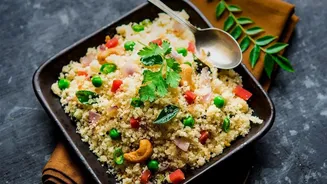
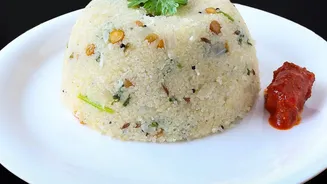
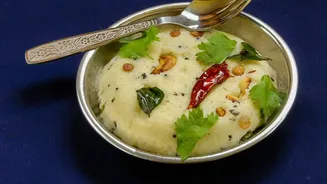
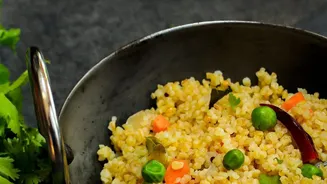
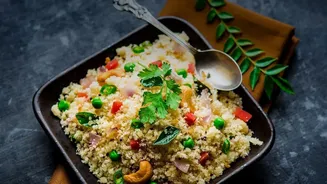
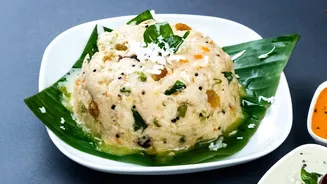
When you think of a classic upma, you're likely imagining the South Indian version, particularly popular in Karnataka and Tamil Nadu. The tempering here is a masterclass in texture and aroma. It typically starts with heating oil or ghee, then adding mustard seeds until they pop. Immediately, urad dal (split black gram) and chana dal (split chickpeas) are added, and fried until they turn a beautiful golden brown. These dals are not just for flavour; they provide a delightful, nutty crunch that contrasts with the soft rava. Next, curry leaves and slit green chillies are tossed in, releasing their signature fragrance. A pinch of asafoetida (hing) is often added to round out the savoury notes. This combination—mustard, dals, curry leaves, and chillies—forms the quintessential flavour base upon which the best upmas are built.
The Karnataka Speciality: Khara Bath
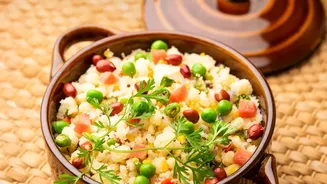
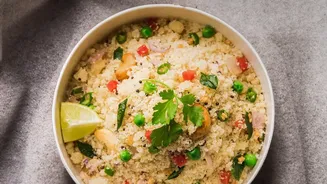
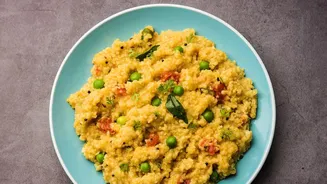
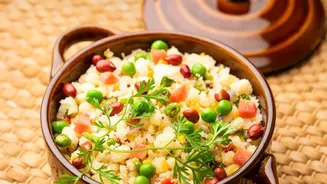
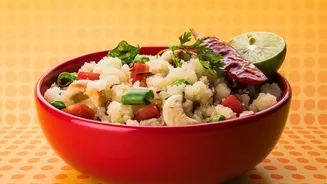
In Karnataka, upma is often called 'Khara Bath' and is a staple in 'darshini' restaurants, frequently served alongside a sweet counterpart, 'Kesari Bath'. The tempering here is similar to the classic style but often more elaborate. It forms the base for a dish loaded with finely chopped vegetables like carrots, beans, and peas. The key differentiator can be the use of a special masala powder, like Vangibath powder, which adds a complex, spicy dimension. Some recipes also call for onions and tomatoes to be sautéed after the initial tempering, creating a richer, more flavourful foundation before the water and rava are added. This style demonstrates how tempering can evolve from a simple spice infusion into a multi-layered masala base.
The Maharashtrian 'Sanja': A Savoury Twist
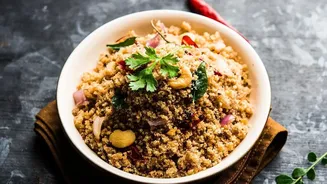
Travel to Maharashtra, and you will find 'Sanja' or 'Tikhat Upma' (spicy upma). While it shares a common ancestry with its southern cousins, it has a distinct personality. The tempering here often includes peanuts, which are fried until crunchy. The most significant difference is the prominent use of onions. After the mustard and cumin seeds splutter, finely chopped onions are sautéed until they turn soft and golden, lending a deep, savoury sweetness to the dish. Turmeric powder is almost always added, giving the Sanja its characteristic yellow hue. Some variations also use buttermilk instead of just water to cook the rava, adding a subtle tangy note that makes it uniquely Maharashtrian.
Beyond Rava: Tempering for All Upmas
The principles of tempering are not limited to just rava (semolina). The same logic applies to the myriad of other upma styles popular across the country. For 'Semiya Upma' (vermicelli upma), the tempering remains largely the same, providing a savoury counterpoint to the delicate pasta-like strands. With 'Bread Upma', a genius way to use up leftover bread, the tempering is often more robust. It usually involves sautéing onions, tomatoes, and sometimes capsicum to create a moist masala base that coats the bread cubes beautifully. For 'Aval Upma' (made with flattened rice or poha), the tempering is light and quick, often featuring peanuts and curry leaves, which perfectly complement the soft, fluffy texture of the poha. Each variation proves that a masterful tadka can elevate any base ingredient.