





A Mission That Rewrote the Textbooks
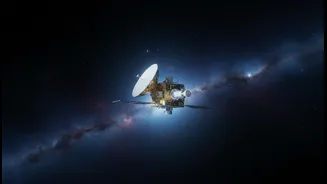
To appreciate what New Horizons is doing today, it is essential to remember its history-making primary mission. Launched on January 19, 2006, with the fastest launch velocity ever achieved from Earth, its main goal was the first-ever reconnaissance of
Pluto. In July 2015, it succeeded spectacularly, transforming the distant, pixelated dwarf planet into a dynamic world of nitrogen-ice glaciers, towering water-ice mountains, and a surprisingly complex atmosphere. The data sent back across billions of miles revealed active geology and even hinted at a possible subsurface ocean, fundamentally changing our understanding of worlds at the edge of the solar system. But that was just the beginning. After Pluto, the mission was extended, and on New Year's Day 2019, New Horizons performed a flyby of Arrokoth, the most distant and primitive object ever explored by a spacecraft.
The Challenge of Age and Distance
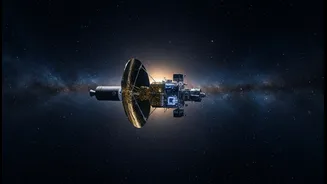
Operating a 20-year-old probe over 9.5 billion kilometers (5.9 billion miles) from home is a monumental technical challenge. For starters, communication is a study in patience; a radio signal travelling at the speed of light takes nearly nine hours to reach Earth. This means controllers can't 'joystick' the spacecraft in real time. Commands must be carefully planned and uploaded, and the probe must have a high degree of autonomy. Power is another constraint. Since it's too far from the sun for solar panels, New Horizons relies on a Radioisotope Thermoelectric Generator (RTG), which produces electricity from the heat of decaying plutonium. However, this power source slowly diminishes over time, forcing engineers to make tough decisions about which systems and instruments to run. To conserve resources during long cruise periods, the team places the spacecraft into hibernation, from which it has just recently awoken after a 321-day nap.
Old Hardware, New Software, Fresh Science
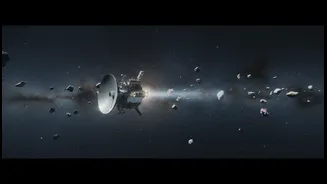
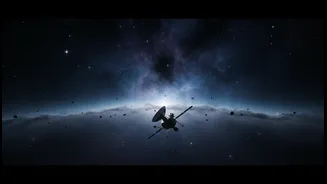
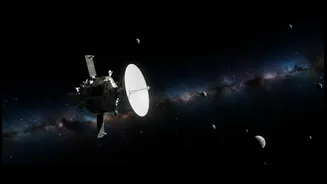
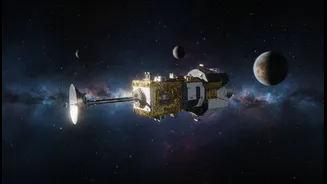
So, how does a vintage spacecraft conduct new science? The answer lies in a combination of unique location and human ingenuity. Now serving as a deep-space observatory, New Horizons is studying the particle and dust environment of the Kuiper Belt from a vantage point no other active mission can reach. While it was hibernating, its instruments continued to gather data on the solar wind—the stream of particles from the sun—and the local dust environment. Recent analysis of its data has already helped scientists understand how the solar wind slows down as it approaches the edge of the solar system. Crucially, mission teams on Earth continue to develop and upload new software to the probe. These updates accommodate the declining power supply and improve its autonomous capabilities, essentially teaching the old hardware new tricks to keep the science flowing.
An Observatory at the Edge of the Solar System
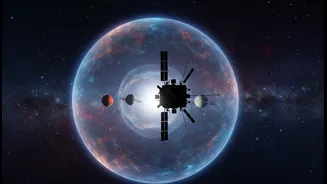
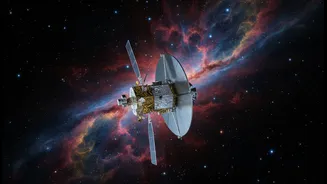
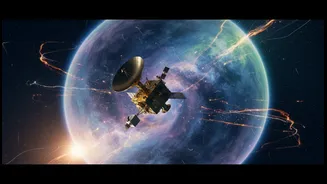
With the spacecraft now awake and healthy, its next phase of science can begin. After downlinking the data gathered during hibernation, it will turn its instruments toward new targets. One of its upcoming tasks is to observe the distribution of hydrogen gas at the far reaches of the heliosphere, the vast bubble of the sun's influence. This will provide invaluable data, helping scientists understand the boundary between our solar system and interstellar space, a region only crossed by the two Voyager probes. The team also hopes to find another distant Kuiper Belt Object for a future flyby, though this remains a challenge. For now, the probe acts as our lone sentinel in the outer solar system, a testament to long-term planning and the enduring value of investing in exploration. Its continued operation showcases a remarkable return on an investment made two decades ago.