






From Test Flights to Commercial Cadence
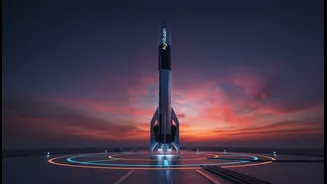
Agnikul Cosmos's journey has been one of methodical progress. The company first made headlines with its successful sub-orbital launch, Agnibaan SOrTeD (SubOrbital Technological Demonstrator), in May 2024. That mission was a crucial test flight, designed
primarily to validate the company's homegrown technologies, especially its unique engine, and gather vital flight data from its own private launchpad at Sriharikota. Now, with Mission-02, the company is signalling a clear change in ambition. The focus is no longer just on proving that the technology works, but on proving it can work reliably and frequently. This move from demonstration to operational cadence is what separates a promising venture from a commercially viable launch provider. The goal is to establish a regular schedule of launches, catering to the burgeoning global market for small satellite deployments.
The Engine of Innovation
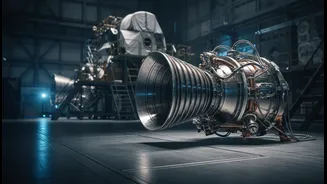
At the heart of Agnikul's strategy is its groundbreaking Agnilet engine. It holds the distinction of being the world's first single-piece, 3D-printed, semi-cryogenic rocket engine. This isn't just a technical achievement; it's a business model disruptor. Traditional rocket engines are complex assemblies of thousands of components, requiring long and expensive manufacturing processes. By 3D printing the entire engine in a single piece, Agnikul drastically reduces production time, cost, and the potential points of failure. The engine uses a semi-cryogenic propellant—a combination of liquid oxygen and aviation-grade kerosene—which is more stable and easier to handle than the super-cooled fuels of fully cryogenic engines. This combination of rapid manufacturing and practical fuel choices is key to enabling the company's goal of frequent, on-demand launches.
The Bold Leap to Reusability
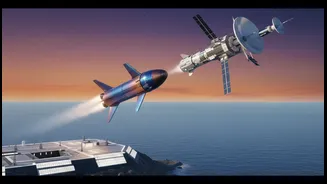
Mission-02 is set to be even more ambitious, as it represents India's first private attempt at recovering an orbital-class rocket booster. The plan involves having the first stage of the Agnibaan rocket perform a controlled descent after separation and be recovered from the ocean. This is a complex manoeuvre that only a few companies globally, like SpaceX, have mastered. Success in this area is a game-changer, with Agnikul estimating that reusability could cut launch costs by as much as 80%. Furthermore, the mission also aims to demonstrate an innovative use for the rocket's upper stage. Instead of becoming space debris, it will be designed to function as an operational platform in orbit, capable of hosting experiments or other technologies.
Powering India’s Commercial Space Dream
Agnikul's evolution is a testament to the success of India's decision to open its space sector to private enterprise in 2020. With the support of organizations like ISRO and IN-SPACe, startups like Agnikul and its contemporary, Skyroot Aerospace, are transforming India from a nation reliant on its state-run agency to a diversified space economy. These companies are carving out a niche in the global market for small satellite launches, a segment that demands flexibility and rapid turnaround times—exactly what Agnikul's model is built to provide. The recent appointment of former ISRO Chairman S. Somanath to Agnikul's board further underscores the strategic importance of this new phase, bringing invaluable experience in launch vehicle design and mission execution.