


Two Problems, One Solution
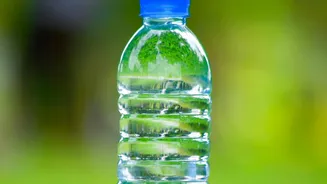
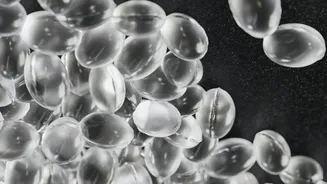
The world faces two enormous and distinct waste challenges: plastic pollution and agricultural residue. Every year, millions of tons of plastic, particularly PET from bottles, clog landfills and oceans. At the same time, farming generates massive quantities
of biomass, like the stalks and leaves of corn plants, which are often left to rot. A team of researchers at Southern Illinois University Carbondale saw these two problems not as separate issues, but as a single, carbon-rich resource. Their question was radical: instead of just recycling waste, could we upgrade it into something completely new, and even edible?
The Science of Upcycling
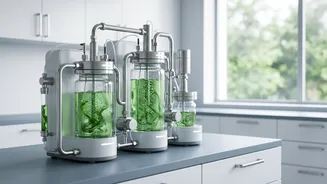
The process begins by breaking down the tough materials. The PET plastic and the corn stover are subjected to a method called oxidative hydrothermal dissolution, which uses high-pressure water and oxygen to decompose them into their basic molecular components. This creates a liquid feedstock, a sort of chemical soup. This is where the magic, or rather the microbiology, happens. The researchers introduce genetically engineered yeasts into this liquid. These microbes are programmed to act as tiny biological factories. They consume the carbon molecules from the broken-down plastic and corn waste and rebuild them into entirely new compounds.
So, Is It Really a Cookie?
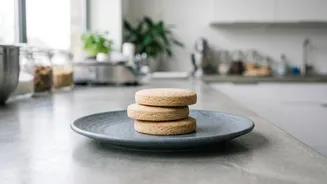
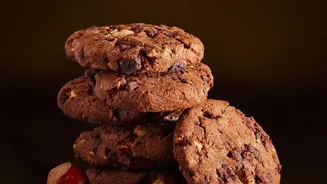
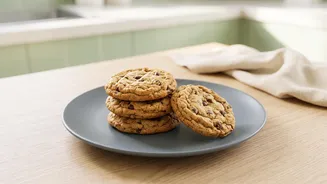
To be clear, the process doesn't churn out a complete, ready-to-bake dough. Instead, it creates the essential building blocks. The programmed yeasts convert the waste into proteins, fats, and acids—the fundamental components of food. Researchers then take this microbially-produced base and add other ingredients like fiber, starch, and sweetener before using a 3D printer to extrude it into the shape of a cookie. These prototypes have been dubbed 'µBites' (pronounced micro-bites). The team has even engineered different yeast strains to produce specific desirable molecules, such as vanillin (the compound that gives vanilla its flavor) and beta-carotene, which the body converts into Vitamin A.
From Lab to Lunchbox?
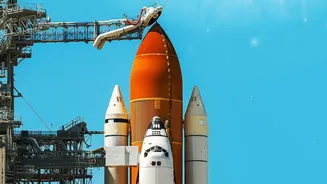
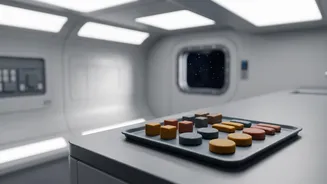
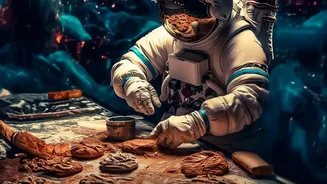
Before you start imagining a future of plastic-based snacks, there are significant hurdles. The most critical is safety and public perception. While researchers state their analyses show the µBites are free from toxins and safe to eat, they are still awaiting institutional approval for human taste tests. Early sensory tests, where participants could smell the product, have been positive, with most saying they would consider eating it in resource-limited situations. The initial inspiration for the project came from a NASA challenge to create food for long-duration space missions, like a trip to Mars, where astronauts must recycle every possible resource. Other potential applications include disaster zones, military submarines, or other environments where fresh food is scarce.
More Than Just a Cookie
The cookie itself is more of a proof of concept than the end goal. The true breakthrough is the platform technology. The ability to transform multiple waste streams into high-value, food-grade materials has vast implications. The same proteins and fats produced by the microbes could be used to create milk alternatives, meat substitutes, or animal feed. The project's lead researcher, Dr. Lahiru Jayakody, emphasizes this point, stating, “Because plastic is carbon and food is carbon.” This perspective shifts our understanding of waste, viewing it not as an endpoint but as a feedstock for a new kind of circular economy. It represents a a new frontier in biorefining, where biology is harnessed to solve pressing environmental and logistical challenges.