





Embracing a New Kind of Weightlessness
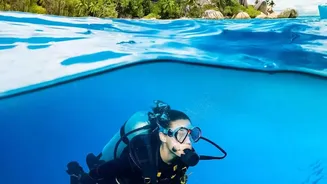
On land, we are in a constant, lifelong battle with gravity. We stand, we walk, we fall. Underwater, that all changes. The first and most profound sensation is one of near-total weightlessness. Thanks to the upward force of the water—a concept called
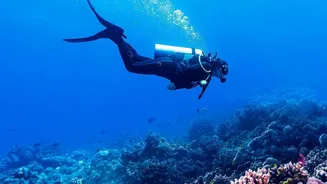
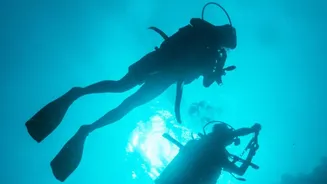
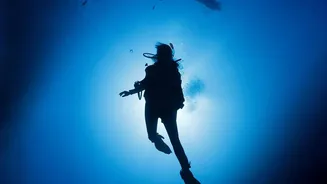
buoyancy—your body and all the heavy gear strapped to it suddenly feel light. An instructor will help you add just enough weight to allow you to sink, but the feeling of being unburdened by gravity is immediate. It’s not quite like being in space, but for most of us, it’s the closest we will ever get. This feeling can be disorienting at first, but it is the foundation for everything that follows. It's the reason diving feels less like swimming and more like flying.
The Magic of Neutral Buoyancy
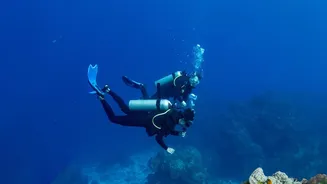
The primary goal of your first in-water session is to find 'neutral buoyancy'. This is the magic state where you are not sinking and not floating, but hovering perfectly still in the water column. Achieving it feels like a superpower. The secret isn't in your arms or legs; it's in your lungs. Your instructor will show you how a slow, deep inhale makes you gently rise, and a full exhale makes you gently sink. Your Buoyancy Control Device (BCD), the vest you wear, helps with major adjustments, but fine-tuning your position becomes an act of mindful breathing. Mastering this is the difference between clumsily fighting the water and gracefully becoming part of it. It's one of the most common struggles for beginners but also the most rewarding skill to learn.
Moving with Purpose, Not Power
Water is about 800 times denser than air, a fact that becomes immediately obvious the first time you try to move. On the surface, swimming can be about power and speed. Underwater, it’s about efficiency and grace. Fast, jerky movements get you nowhere and burn through your air supply. Instead, your instructor will teach you to use long, slow, deliberate kicks from the hip, like a frog. This technique uses your largest muscles to gently propel you through the dense water with minimal effort. You learn to work with the water, not against it. Over-kicking is a natural response for people used to swimming, but in scuba, less is more. Slowing down conserves energy and allows you to relax and enjoy the scenery.
Thinking in Three Dimensions
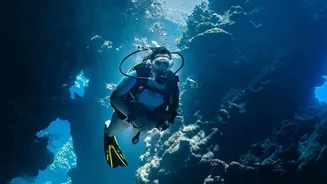
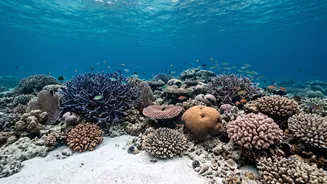
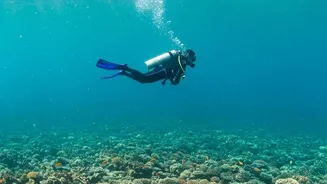
On land, we live on a flat plane. We move forward, backward, left, and right. Underwater, you are free. The world opens up in all directions, and you can move through it in three dimensions. Want to inspect a coral head below you? A gentle fin kick and an exhale will take you there. Curious about the fish hovering just above? A deep breath will lift you up. This freedom is exhilarating. You are not just observing the underwater world; you are moving within it as an equal. You can glide effortlessly over a sandy patch, hang suspended beside a wall of coral, or slowly spiral up toward the surface light. It’s a complete shift in spatial awareness and one of the most joyous parts of learning to dive.
Your Arms Have a New Job
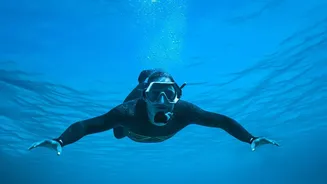
A common instinct for new divers is to use their arms to swim, just as they would on the surface. In scuba diving, however, your arms have retired from propulsion. Using them to 'doggy paddle' is inefficient, kicks up sand, and can disturb delicate marine life. Instead, your hands take on new roles. They are used for communication, with a whole set of signals to learn for 'okay', 'go up', or 'look at that'. They are used to hold your pressure gauge to monitor your air or to stabilize yourself by gently holding onto a non-living surface if needed. Keeping your arms streamlined at your sides or folded across your chest is a sign of a comfortable, efficient diver. It's a hard habit to break, but a crucial one for becoming a calm and confident presence underwater.