
The Science of an Even Cook
The primary reason uniform cuts are essential is basic physics: pieces of the same size and shape cook at the same rate. When you have a mix of large and small chunks, the smaller pieces cook through much faster. By the time the larger pieces are tender,
the smaller ones are often overcooked. This applies to nearly every cooking method, from roasting and frying to steaming and simmering. Uniformity ensures that heat penetrates each piece of food consistently, allowing for predictable and reliable results every time you cook. This even heat distribution is crucial for achieving the delicious browning known as the Maillard reaction, a chemical process between amino acids and sugars that creates deep, complex flavours. When pieces are uneven, some might not get hot enough to brown, while others burn.
Better Texture and Flavour in Every Bite
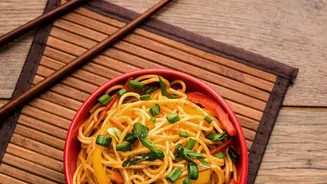
Beyond just cooking time, consistent slicing dramatically improves the texture and flavour of a dish. Imagine a stir-fry where some carrot slices are crisp-tender and others are unpleasantly hard, or a potato curry with both firm and mushy cubes. Evenly cut ingredients provide a consistent and enjoyable mouthfeel in every spoonful. This allows flavours to meld more harmoniously. When every piece of onion is diced to the same size, for instance, they caramelise together, creating a uniform sweetness that integrates perfectly into a sauce. Finely minced garlic and herbs release more aromatic oils, distributing their essence throughout the dish, whereas a coarse chop provides bigger, bolder pops of flavour. The cut directly impacts how the ingredient behaves and contributes to the final taste profile.
The Right Tools and a Sharp Edge
While you don't need an arsenal of expensive equipment, a few key tools make consistent cutting achievable. The most important tool in your kitchen is a sharp chef's knife. A dull knife is more dangerous than a sharp one because it requires more pressure to cut, increasing the risk of it slipping. A sharp blade glides through food, making clean cuts that preserve the ingredient's cellular structure, which helps retain moisture and freshness. For home cooks, an 8-inch chef's knife is a versatile starting point. To ensure stability, always place a damp towel under your cutting board to prevent it from moving. While tools like mandolines are great for creating paper-thin, perfectly uniform slices, mastering basic knife skills is the true foundation of a confident cook.
Mastering the Foundational Grips and Cuts
Proper technique is as important as the tool itself. For safety and control, use the "claw grip" with your non-knife hand: curl your fingertips inward and guide the blade against your knuckles. This keeps your fingertips safely away from the blade. Hold the knife with a firm "pinch grip," pinching the base of the blade between your thumb and index finger for maximum control. When tackling round vegetables like onions or potatoes, first slice a small piece off one side to create a flat, stable base. This prevents the ingredient from rolling around. From there, you can proceed with basic cuts like dicing (small cubes), julienning (thin matchsticks), or simply slicing into even rounds. Practice these fundamentals, and you'll see your speed, safety, and consistency improve dramatically.
From Home Cook to Polished Presentation
Finally, don't underestimate the visual impact of your knife work. A dish with neatly and uniformly cut vegetables and proteins simply looks more professional and appetising. It signals care and intention, elevating a simple homemade meal into something special. Think of a colourful vegetable medley where every component is a perfect, jewel-like dice, or a salad with crisp, elegant julienned strips. This attention to detail enhances the dining experience before the first bite is even taken. It’s a hallmark of professional kitchens, where the principle of 'mise en place' (everything in its place) begins with precise and consistent cuts. Adopting this mindset is one of the easiest ways to make your cooking look as good as it tastes.