


Understanding 'Subject to Availability'
The phrase 'subject to availability' is key to planning an elephant safari in Assam. It exists because the number of safari seats is strictly limited by forest authorities to ensure the welfare of the elephants and minimise stress on the park's ecosystem.
Demand, especially during peak season from November to March, far outstrips supply. These coveted one-hour rides happen in the early morning, typically in two shifts starting around 5:00 AM and 6:30 AM, which is the best time for wildlife sightings. This means that simply showing up is not a guarantee. Success requires careful planning, as a finite number of elephants and seats are available each day across the designated safari zones.
Top Destination: Kaziranga National Park
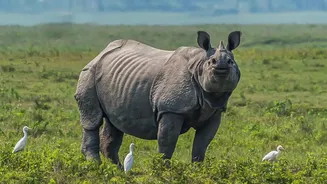
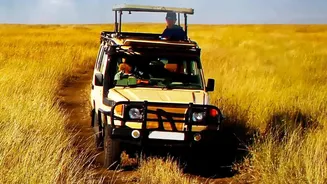
Home to the world's largest population of the one-horned rhinoceros, Kaziranga National Park is the premier destination for elephant safaris. This UNESCO World Heritage site offers rides primarily in two of its ranges: the Western Range (Bagori) and the Central Range (Kohora). The Bagori range is highly recommended for Indian nationals and is famous for offering incredibly close views of rhinos grazing in the tall elephant grass. The Central Range is often reserved for VIPs and foreign delegates. The experience is magical, allowing you to move quietly through the grasslands and see rhinos, wild buffalo, and swamp deer from a safe and elevated perspective, often just metres away. The safari provides a unique vantage point that a jeep simply cannot match.
Wild Alternative: Manas National Park
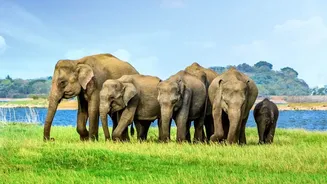
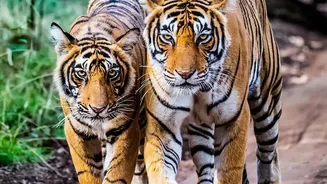
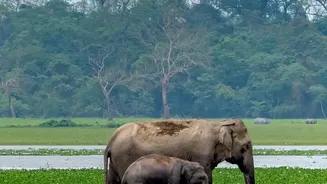
For a different but equally compelling safari, consider Manas National Park, another UNESCO World Heritage site located in the Himalayan foothills. Unlike the open grasslands of Kaziranga, Manas offers a journey through denser forests and riverine landscapes. The elephant safaris here, typically in the Bansbari range, provide a quieter, more tranquil experience. While rhinos are present, Manas is also celebrated for its population of wild elephants, tigers, golden langurs, and over 500 species of birds. The rides offer a chance to explore parts of the forest that are inaccessible by jeep, giving you a sense of raw, untamed wilderness. Safaris usually run in two morning slots, around 6:00 AM and 7:00 AM.
Convenient Option: Pobitora Wildlife Sanctuary
If you're short on time or based in Guwahati, Pobitora Wildlife Sanctuary is an excellent choice. Located just a couple of hours from the city, it's often called 'Mini Kaziranga' due to its incredibly high density of one-horned rhinos. Rhino sightings are almost guaranteed here. The sanctuary offers both morning and afternoon elephant safaris, providing more flexibility than other parks. Though smaller, its 16 square kilometres of effective rhino habitat provide a compact and rewarding wildlife experience, making it a perfect day trip for those who want a taste of Assam's natural splendour without the longer journey to Kaziranga or Manas.
The Booking Process: How to Secure a Spot
Booking an elephant safari requires a strategy. While some government portals like Sewa Setu allow for online permit booking for parks like Manas and Kaziranga, these often just cover the entry permit, not the safari itself. For elephant safaris, a large number of seats are managed offline. The most common methods are booking through your hotel or an authorised tour operator well in advance, or trying your luck at the on-the-spot counters at the park's range office. However, queuing at the counter can mean arriving as early as 4:30 AM, especially during peak season, as slots are limited and distributed on a first-come, first-served basis. Booking through a reputable local operator is often the most reliable way to secure a spot and avoid disappointment.
Best Time to Visit and What to Expect
The national parks in Assam are typically open to tourists from early November to the end of April. They remain closed from May to October during the monsoon season due to widespread flooding. The absolute best time for a safari is during the cooler, drier months of November through March, when the weather is pleasant and wildlife is more visible in the shorter grass. Expect an early start, as all elephant safaris begin at dawn to maximise the chances of animal sightings. Remember to carry your ID, wear neutral-coloured clothing, and follow all instructions from the mahout and forest guides to ensure a safe and respectful encounter with the incredible wildlife of Assam.