






A Global Alarm with Local Resonance
The first-ever 'State of the World’s Migratory Species' report, released by the UN's Convention on the Conservation of Migratory Species (CMS), presents a sobering picture. It reveals that nearly half of all migratory species are experiencing population
declines, with more than one in five facing the threat of extinction. For birds, the numbers are particularly concerning, with almost 44% showing declining population trends. The primary culprits identified are habitat loss and overexploitation, both driven by human activity. This isn't a distant problem; it has profound implications for India, which serves as a critical resting and feeding ground for hundreds of these species.
India’s Prime Position on the Flyway
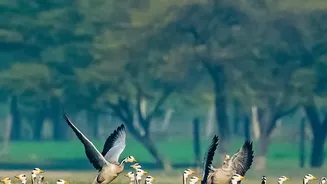
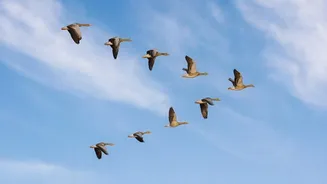
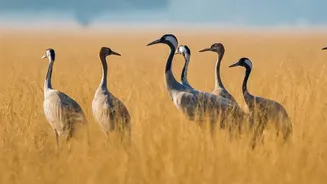
India is the heart of the Central Asian Flyway (CAF), a superhighway for birds that stretches from the cold arctic tundra to the warm coasts of the Indian Ocean. Over 370 species use this route annually, and a vast majority of them rely on India's diverse habitats to survive their arduous journey. Iconic birds like the bar-headed goose, which flies over the Himalayas, Amur falcons, and various cranes and shorebirds depend on key Indian sites. These are not just casual stopovers; they are essential refuelling stations. Without access to healthy wetlands, grasslands, and coastal areas, these birds simply cannot complete their epic migrations.
The Squeeze on Our Wetlands
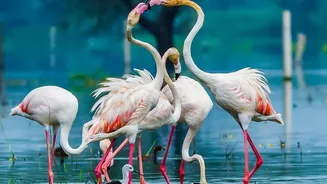
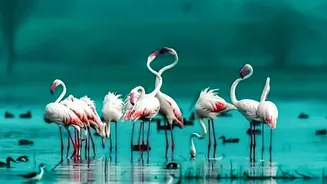
The report's central warning about habitat loss is acutely visible across India. Our precious wetlands—the lakes, marshes, and coastal mudflats that these birds depend on—are under immense pressure. India has reportedly lost nearly a third of its natural wetlands over the past few decades to urban expansion, pollution, and agricultural intensification. Sites like Keoladeo National Park, Chilika Lake, and Deepor Beel are ecological treasures, but they face constant threats that degrade their ability to support life. This degradation directly impacts the survival rates of migratory populations, turning their life-saving pit stops into potential dead ends.
Beyond Sanctuaries: A Network for Survival
A key takeaway from the CMS report is that isolated protected areas, while important, are not enough. The findings emphasize the need for 'ecological connectivity'—a network of safe havens across the entire migratory route. For India, this means looking beyond famous sanctuaries and ensuring that smaller, lesser-known wetlands are also protected and managed. The report highlights that nearly half of the Key Biodiversity Areas identified for migratory species lack formal protection. India has a National Action Plan for the conservation of migratory birds, which aims to create a more connected landscape for these travellers, but implementation and enforcement remain critical challenges.
Why Their Journey Is Our Concern
The fate of migratory birds is intrinsically linked to our own environmental and economic well-being. These birds are not just beautiful visitors; they are active participants in our ecosystem. They help control agricultural pests, pollinate plants, and disperse seeds. Furthermore, the vibrant biodiversity they represent fuels local ecotourism economies in places like Bharatpur and Chilika, providing livelihoods for local communities. Protecting their habitats is therefore an act of self-preservation. Healthy wetlands improve water quality, act as natural flood buffers, and store vast amounts of carbon, making them crucial allies in the fight against climate change.