





A Tale of Two Hemispheres
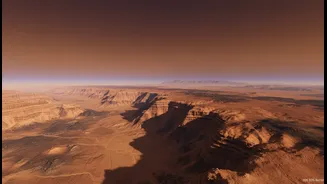
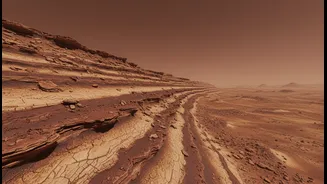
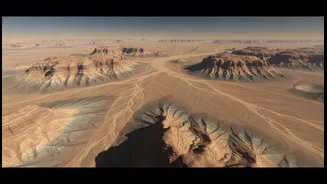
For years, planetary scientists have been fascinated by the Martian dichotomy: a stark contrast between its two hemispheres. The southern hemisphere is rugged, ancient, and heavily cratered, while the northern hemisphere is remarkably smooth, flat, and sits
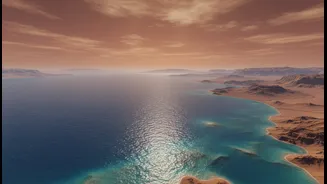
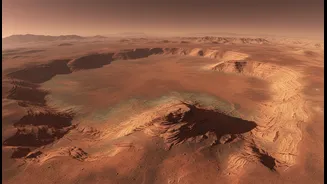
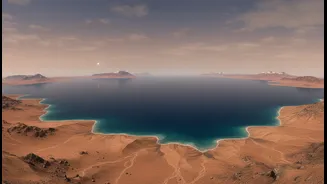
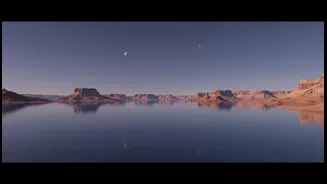
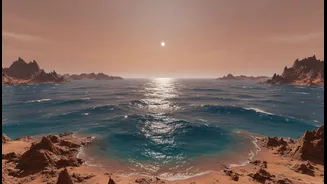
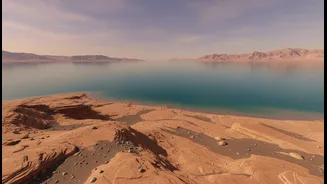
at a much lower elevation. This led to a tantalizing hypothesis: perhaps the vast northern lowlands, known as the Vastitas Borealis, are the dried-up basin of a primordial ocean that existed billions of years ago. While orbiters have spotted what look like ancient riverbeds and deltas, the evidence for a true ocean has been debated, partly because the proposed shoreline features were found at inconsistent elevations.
The Search for a Shoreline
The idea of a Martian ocean isn't new. Since the Viking orbiter missions in the 1970s, scientists have identified features that looked like ancient shorelines, particularly the so-called Arabia and Deuteronilus levels. However, this evidence has always been controversial. High-resolution topographic data from later missions revealed that these supposed coastlines had elevation changes of several kilometres, which shouldn't happen with a stable body of water. This inconsistency led many to question whether they were shorelines at all, with some suggesting they could be volcanic ridges or other geological formations. The puzzle remained: if there was an ocean, where was the consistent, large-scale evidence?
A New 'Bathtub Ring' Discovery
The latest research, published in the journal Nature, takes a different approach. Instead of looking for shifting, narrow shorelines, scientists from Caltech and the University of Texas at Austin decided to look for a larger, more stable feature: a coastal shelf. On Earth, continents don't just drop off into the abyss; they have wide, gently sloping shelves that extend for hundreds of kilometres under the sea before the steep drop to the deep ocean floor. By analyzing topographic data from Martian orbiters, researchers identified a similar feature—a wide, flat band wrapping around the northern lowlands. They describe this as a 'bathtub ring'—a stable landform left behind by a massive, long-gone body of water.
Why This Shelf Matters
The crucial part of this discovery is the shelf's elevation. The analysis confirmed that this vast shelf consistently sits below the elevation of the previously identified, albeit controversial, shoreline markers and river deltas. This is the geological smoking gun researchers have been looking for. For a basin to hold an ocean, its floor must be below the water level. This finding logically connects the basin to the shorelines, suggesting the features formed in relation to the same massive body of water. The existence of such a shelf also implies the ocean was not a fleeting phenomenon but a stable feature that lasted for millions of years, long enough to carve out such a significant landform.
Painting a Picture of Ancient Mars
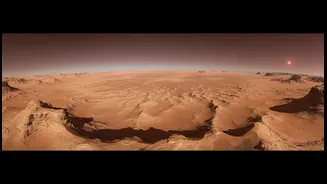
This discovery helps us imagine a very different Mars around 3.5 billion years ago. The findings suggest an ocean that could have covered up to a third of the planet's surface. Such a large body of liquid water would have required a warmer climate and a thicker atmosphere than Mars has today. More importantly, the long-term presence of a stable ocean dramatically increases the chances that Mars could have once hosted life. Sedimentary deposits along this ancient coastal shelf would be prime targets for future missions, as they could preserve the chemical signatures or fossilised evidence of any past life, much like they do on Earth. The study provides a new, compelling roadmap for where to look.