







More Than Just a Conference
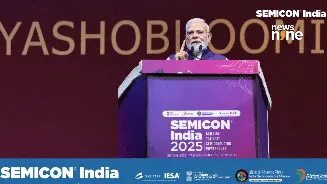
SEMICON India has quickly evolved into the flagship event for the country's burgeoning semiconductor industry. The fifth edition, scheduled for September 17-19 in New Delhi, is set against a backdrop of significant progress. Prime Minister Narendra Modi
is slated to inaugurate the event, which is expected to draw over 500 exhibitors, including more than 240 international firms, and delegations from over 40 countries. Organised by the India Semiconductor Mission (ISM) and global industry association SEMI, the theme “Silicon to Systems: Building the Ecosystem” underscores a crucial shift. It reflects India's move from simply attracting investment to building a complete, resilient, and globally competitive value chain.
Bridging the Design and Manufacturing Gap
For decades, the semiconductor world has been split. Chip design, the creative blueprinting of a chip's function, is a high-value, knowledge-intensive field where India already has a strong foothold, accounting for roughly 20% of the world's design talent. Manufacturing, or fabrication, is the capital-intensive, industrial side, turning those designs into physical silicon. Historically, nations excelled at one or the other. India's strategy, championed at SEMICON India 2026, is to master both. By fostering an ecosystem where design houses can work closely with local fabrication (fabs) and packaging (OSAT) units, India aims to reduce time to market, spur innovation, and capture more value domestically. The government's Design Linked Incentive (DLI) scheme actively supports this, providing startups and academic institutions with the tools and financial backing to turn ideas into silicon.
From Policy to Production
The ambition is backed by a massive government push. Building on the foundation of the initial India Semiconductor Mission, the newly approved 'Semicon 2.0' program has an outlay of ₹1,27,500 crore (approximately $1.27 trillion). This second phase broadens support across six strategic pillars: chip design, equipment and materials, fabrication, packaging, R&D, and talent development. The results are becoming tangible. As of August 2026, several projects have already commenced commercial production, with MeitY Secretary S Krishnan stating that five to six projects are expected to be commercially live by the year's end. Key investments include Tata’s projects in Gujarat and Assam and Micron’s facility in Sanand, Gujarat. This year's event introduces a “Sand to Silicon to Systems” Value Chain Experience, an exhibition designed to showcase India's growing capabilities across the entire process.
Building a Self-Reliant Ecosystem
True self-reliance goes beyond just factories. It requires a deep network of suppliers, a highly skilled workforce, and continuous research. SEMICON India 2026 places a strong emphasis on these supporting elements. The event will feature discussions on supply chains, specialty chemicals, and materials needed for chip production. Another critical focus is talent. While India excels in design engineering, a massive effort is underway to train the workforce required for advanced manufacturing roles. The government is also fostering R&D and promoting indigenous intellectual property to ensure India moves from being a technology consumer to a creator. This holistic approach is crucial for reducing dependence on imports and strengthening national security.
The Road Ahead
India's semiconductor journey is a marathon, not a sprint. Building a globally competitive ecosystem is a complex, multi-decade endeavor. However, the momentum is undeniable. The Indian semiconductor market is projected to grow from around $100 billion to $200 billion, creating huge domestic demand. Global giants like ASML, Applied Materials, and Lam Research are actively participating, signalling confidence in India's strategy. SEMICON India 2026 is a powerful symbol of this progress, a place where policy, investment, and innovation converge. It brings all the key players—from global CEOs to local startups—under one roof to collaborate and accelerate the mission. While challenges remain, the event solidifies India's position not just as an emerging player, but as a future cornerstone of the global semiconductor supply chain.