




A New Security Pact is Born
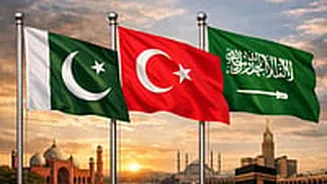
On August 7, 2026, the leaders of Saudi Arabia, Turkey, and Pakistan signed the Mecca Joint Defence Agreement, a landmark trilateral pact. The core of the agreement is a collective security clause: an armed attack on any of the three nations will be regarded
as an attack on them all. Signed in Islam's holiest city, the pact carries significant symbolic weight, signalling a new chapter in cooperation between three of the Muslim world's most influential powers. The agreement builds on an existing bilateral defence arrangement between Saudi Arabia and Pakistan from 2025 but broadens its scope by including Turkey, a major military power and NATO member. However, this is not a Middle Eastern NATO. The agreement is intentionally less rigid, designed for flexibility rather than creating a formal, integrated military command.
What is a 'Strategic Hedge'?
In international relations, 'hedging' is a strategy used by countries to navigate uncertainty. Instead of fully aligning with one major power (bandwagoning) or directly opposing it (balancing), a nation that hedges cultivates relationships with multiple, often competing, global powers to keep its options open. Borrowed from finance, the term refers to diversifying a portfolio to minimize risk. For a country, this means engaging economically with one power while maintaining security ties with another, or building new partnerships to avoid over-reliance on a single ally. It’s a policy of not putting all your eggs in one basket, particularly when you are unsure about the future intentions or reliability of a major partner. The goal is to maximize autonomy and security without getting drawn into binding commitments that could backfire.
An Insurance Policy Against Uncertainty
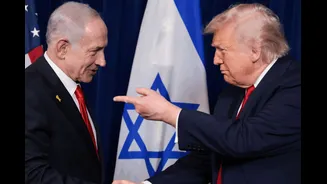
The primary driver behind the Mecca Agreement is a growing perception across the Gulf that the United States is a less predictable security guarantor. For decades, the regional security order was based on a simple bargain: Gulf states, particularly Saudi Arabia, provided stable energy supplies, and in return, the US provided a security umbrella. However, recent events, including attacks on energy infrastructure and shifting US priorities, have eroded confidence in this arrangement. Gulf capitals have concluded that even a deep partnership with Washington is not an automatic guarantee of protection in a crisis. The Mecca Agreement is therefore seen as an insurance policy. It is not an attempt to replace the American security role but to supplement it, creating a regional framework that can act independently if needed. It's a clear signal that regional powers are moving toward greater strategic autonomy.
A Trio of Complementary Powers
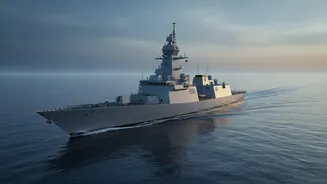
Each signatory brings a unique and complementary set of strengths to the table, making the trio a formidable combination. Saudi Arabia offers immense financial resources, significant energy power, and unparalleled diplomatic and religious influence within the Arab and Muslim worlds. Turkey provides a large, battle-tested military with NATO experience and, crucially, a rapidly advancing defence industry known for its sophisticated drones, naval platforms, and electronic warfare systems. Pakistan contributes a large and experienced military and, most significantly, its status as the only nuclear-armed state in the Muslim world. While the pact does not explicitly create a nuclear umbrella for Saudi Arabia and Turkey, the inclusion of a nuclear power adds a powerful, if deliberately ambiguous, layer of deterrence.
Vagueness as a Strategic Feature
Unlike NATO's Article 5, the Mecca Agreement does not specify exactly what form a response to an attack must take. There is no integrated command structure or permanently assigned forces. This ambiguity is not a flaw in the drafting; it is the entire point. A rigid, all-or-nothing commitment would undermine the very idea of hedging. By leaving the nature of the response to be decided by consultation, the signatories retain their sovereign control and flexibility. This allows them to claim solidarity and coordinate their actions while giving them the option to tailor their response to the specific context of a crisis, rather than being automatically dragged into a conflict. It gives them a framework for cooperation without the constraints of a formal alliance, embodying the core principle of keeping one's options open.