





What Exactly Is Floating Yoga?
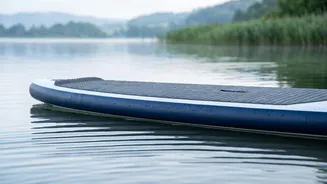
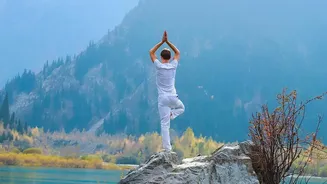
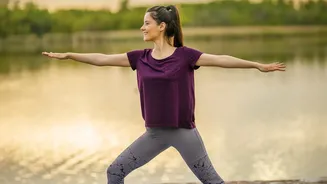
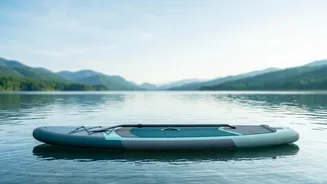
Floating yoga, most commonly known as Stand-Up Paddleboard (SUP) yoga, is exactly what it sounds like: a yoga practice performed on a paddleboard in a body of water like a calm lake, pool, or ocean bay. Instead of a firm, predictable mat, your foundation
is a board that responds to every subtle shift in your weight and the water's movement. This simple change introduces a dynamic challenge that transforms the entire experience. While some forms of aqua yoga involve performing modified poses in chest-deep water, SUP yoga asks you to balance on top of it, making every movement a deliberate act of stability.
Why Coordination Becomes the Core Challenge
On solid ground, you can often muscle your way through a pose. On a paddleboard, brute force is replaced by the need for precise coordination. The unstable surface means your body must constantly make micro-adjustments to maintain balance. This isn't just about not falling in—it’s about engaging a network of muscles that often go overlooked in a traditional practice. The board provides instant feedback; if your weight is poorly distributed or your movement is jerky, the board will wobble. This forces you to slow down, connect your mind to your body, and move with intention and fluidity, much like the water itself.
Engage Your Core Like Never Before
The secret to stability on the water is a deeply engaged core. While traditional yoga certainly strengthens your midsection, SUP yoga makes it a non-negotiable, constant requirement. To hold even the simplest poses, like a low lunge or downward-facing dog, your abdominal muscles, obliques, and lower back must fire continuously to act as your anchor. This constant engagement builds profound core strength and stability that translates directly back to a stronger, more controlled practice on land and improved posture in daily life. Every breath and every shift is a core workout in disguise.
A New Level of Mindfulness and Focus
The intense focus required to stay balanced on the board has a powerful mental benefit: it forces you into the present moment. Distracting thoughts tend to fade away when your immediate priority is maintaining equilibrium. This heightened state of awareness, or mindfulness, is one of the key goals of yoga. The gentle lapping of the water, the fresh air, and the connection to nature further enhance this meditative quality, reducing stress and promoting a sense of calm and clarity that can be harder to find indoors. You have to pay close attention to every muscle and every breath, creating a deep mind-body connection.
Getting Started on the Water
The idea of balancing on water might seem intimidating, but floating yoga is surprisingly accessible to beginners. Instructors typically start with basic, stable poses close to the board, like sitting, kneeling, or cat-cow, before progressing to standing postures. It’s wise to accept that you might fall in—it’s often part of the fun and a great way to cool off. Key tips include keeping your gaze on a fixed point on the horizon, maintaining a wide stance, and moving slowly and deliberately. Remember, the goal isn't to perform complex poses perfectly, but to embrace the unique challenge and enjoy the process of finding your balance.