



The Journey to India's Eastern Edge
The road to Dong Valley is an adventure in itself, a multi-day commitment that takes you deep into the heart of Arunachal Pradesh. The journey typically begins from Dibrugarh in Assam, a two-day drive that snakes through verdant tea gardens and increasingly
rugged Himalayan foothills. The first major stop within Arunachal is Tezu, the last town with reliable services like ATMs and full-service mechanics. From here, the path gets narrower and more challenging, tracing the course of the mighty Lohit River. Travellers must secure an Inner Line Permit (ILP) to enter the state, and since Dong is in a sensitive border area, an additional Protected Area Permit (PAP) arranged through a tour operator is often necessary. It is crucial to carry multiple printed copies of these permits, as they are required at several military checkpoints along the way.
Walong: A Town Steeped in History
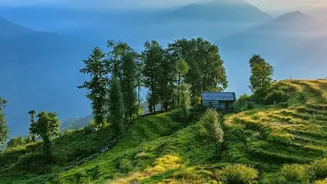
Walong is the gateway to Dong Valley and a place of profound historical significance. This small cantonment town is remembered for the incredible bravery of Indian soldiers during the 1962 Sino-Indian War. A visit to the Walong War Memorial is a humbling experience, paying tribute to the soldiers who defended this frontier. The town itself is nestled in a stunning landscape of pine forests and overlooked by majestic peaks. Situated on the banks of the Lohit River, Walong serves as a base for travellers, offering a few government guesthouses and homestays. These homestays, often run by local Meyor and Mishmi families, provide a basic but authentic experience with home-cooked meals, offering a glimpse into the local way of life.
The Pre-Dawn Trek to First Light
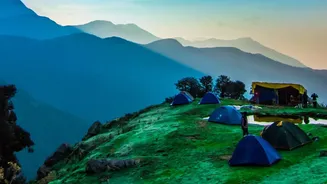
The main event of any trip to Dong is witnessing the sunrise, and this requires an early start. Trekkers typically begin their ascent around 2 or 3 AM to reach the viewpoint in time. The trek starts from a suspension bridge over the Lohit River near Walong. Armed with headlamps and layered in warm clothing to combat the pre-dawn chill, the hike is a short but steep climb through a pine forest. The trail, though only a few kilometres long, is an experience of pure anticipation. In the quiet darkness, the sounds of the forest and the rushing river below are your only companions as you make your way up the ridge to the vantage point that promises a spectacular celestial show.
A Sunrise Like No Other
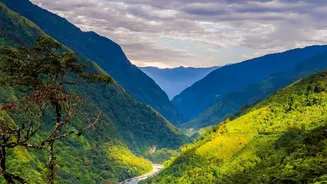
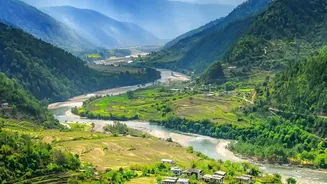
As you reach the viewpoint, the eastern sky begins to transform. The first hint of light appears around 4:30 AM, painting the horizon with hues of orange and red. This is the moment Dong Valley is famous for: the very first rays of sun to touch Indian soil. The light cascades over the tri-junction where India, China, and Myanmar converge, illuminating the surrounding peaks and the winding, blue-green ribbon of the Lohit River below. It’s a tranquil and deeply moving spectacle, a quiet moment of connection with nature in one of the country's most remote corners. For photographers and nature lovers, the panoramic view is an unforgettable reward for the early morning effort.
Beyond the Sunrise: Exploring the Region
While the sunrise is the main draw, the area around Walong and Dong offers more to explore. The Lohit River, known for its reddish tint due to iron-rich soil, is a powerful presence. You can visit natural hot springs near the river bank for a relaxing soak. For those interested in local culture, interacting with the Meyor tribe, a small community with a unique blend of Mahayana Buddhism and animist beliefs, is a highlight. Further afield, a drive to the village of Kibithu, one of India's easternmost outposts, offers breathtaking views and a sense of being at the very edge of the map. The entire region is a botanist's dream, with alpine flora giving way to subtropical forests rich in orchids and rhododendrons.